Quick answer
Classify smartphones, other cellular phones and mobile data or IoT terminals, then review U.S. duty, FCC authorization, origin and entry records.
Classification and import conclusion
Land mobile communication terminal is a regulatory description, not one HTSUS number. A complete smartphone generally starts in 8517.13; another cellular or wireless-network telephone starts in 8517.14; a non-telephone data, telemetry or IoT terminal that transmits and receives data generally starts in 8517.62. The ten-digit statistical suffix must be selected from the HTSUS in force on the entry date. A radio module, part or device whose principal function lies elsewhere cannot be moved into these lines merely because it uses LTE or 5G.
Choose the correct 8517 branch
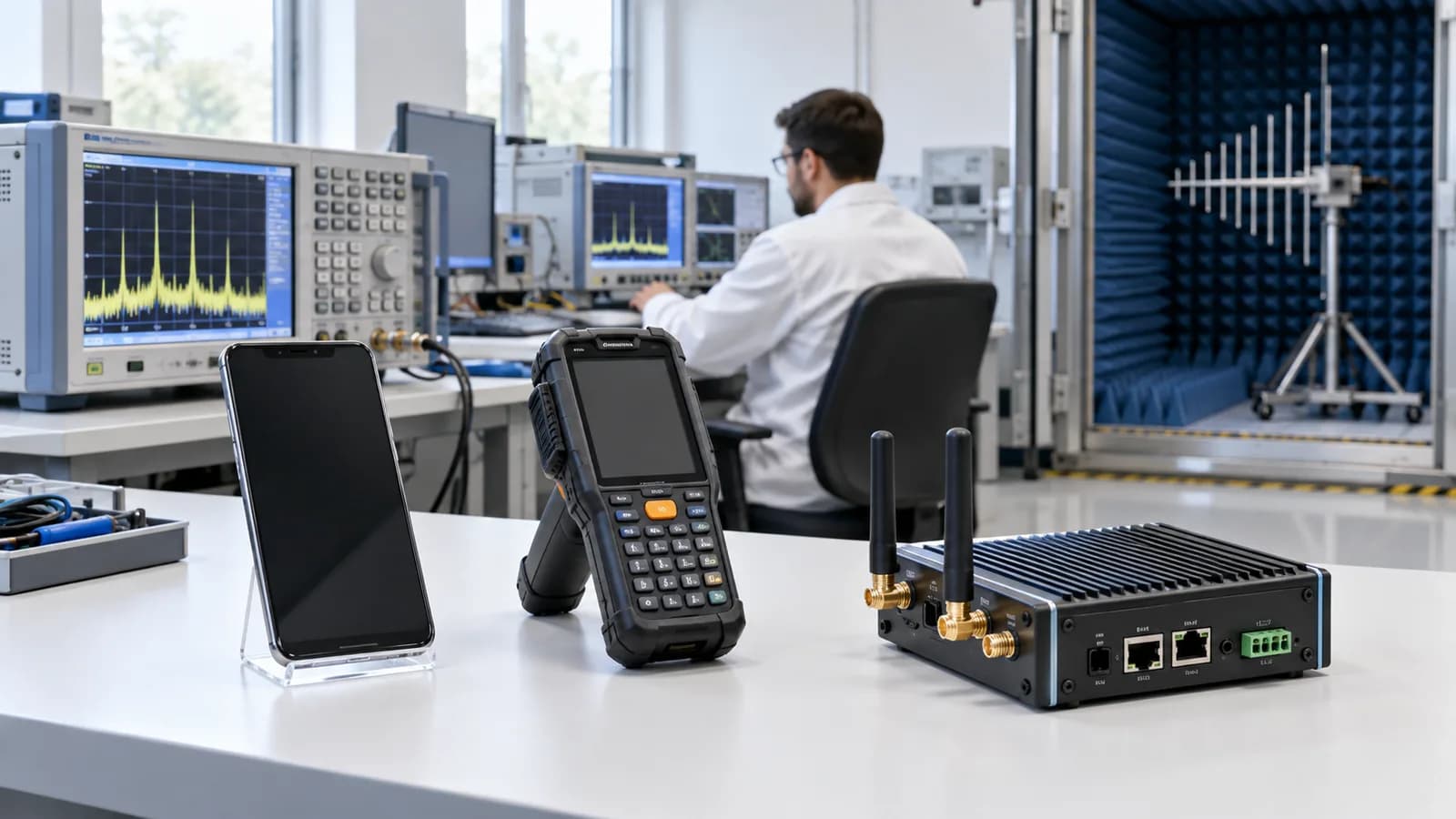
The file should establish voice capability, smartphone operating system and applications, SIM/eSIM, display and user interface, modem standards, frequency bands, antenna, Ethernet/Wi-Fi interfaces and intended use. A rugged handheld with cellular voice may remain a telephone; a gateway with no telephone character is usually a data apparatus. Apply GRI 1 and 6 to the condition as imported, and compare any heading that describes the device's actual principal function more specifically.
Duty, origin and Chapter 99
The relevant 8517 telecommunications lines commonly carry a Free Column 1 General rate, but that does not establish the final landed duty. Confirm the exact ten-digit line, country of origin, Chapter 99 status, Section 301 measures and any product exclusion on the entry date. China-origin goods require a live Chapter 99 review; do not copy a Section 301 rate from another 8517 line. Formal entries may incur merchandise processing fees and ocean shipments may incur harbor maintenance fees.
FCC authorization and radio compliance
Before marketing or importing for sale, intentional radiators generally require FCC certification and an FCC ID under 47 CFR Parts 2 and 15 and the applicable licensed-service rules. RF-exposure evaluation under 47 CFR 1.1307, 2.1091 or 2.1093 depends on portable/mobile use and separation distance. Supplier's Declaration of Conformity may cover qualifying unintentional-radiator functions, but it does not replace certification of cellular, Wi-Fi or Bluetooth transmitters. Imported samples and test units must fit a specific 47 CFR 2.1204 condition.
Battery, marking and supply-chain controls
Mark the actual country of origin under 19 U.S.C. 1304 and 19 CFR Part 134. Keep substantial-transformation evidence where assembly, firmware and radio modules involve more than one country. Screen the supply chain under UFLPA and 19 U.S.C. 1307. A lithium-powered device also needs the UN 38.3 test summary and compliant air or ocean dangerous-goods documentation; a charger may have separate safety and energy-efficiency obligations.
Entry file and proposed description
Retain invoice, packing list, transport document, bill of materials, block diagram, user manual, band/power/antenna table, FCC grant and test reports, label artwork, origin analysis, battery records and Chapter 99 worksheet. Suggested non-phone description: “Cellular data terminal for transmitting and receiving data over 4G/5G networks, SIM/eSIM capable, not principally a telephone, model…, new.” For recurring or borderline configurations, seek a prospective CBP ruling before entry.
Official sources
Sources checked September 21, 2026: USITC HTS, FCC equipment authorization, CBP CROSS and USTR Section 301 tariff actions; FCC RF-exposure guidance; FCC importation guidance. This conditional analysis is not a CBP ruling or an FCC grant.
Editorial note
Prepared by the Global HS Code Checker Editorial Team for customs-classification, tariff and import-policy research. The correct code and applicable measures may change with the merchandise's actual characteristics, jurisdiction, entry date and supporting record. Verify the current tariff, governing measures and competent customs authority before filing an entry. A reviewer is identified only after a named expert has completed the review.