Quick answer
Classify an electric thermopot or hot-water dispenser under HTSUS 8516.10.0040 and review duty, Chapter 99, safety, food-contact, FCC and marking requirements.
Classification and duty conclusion
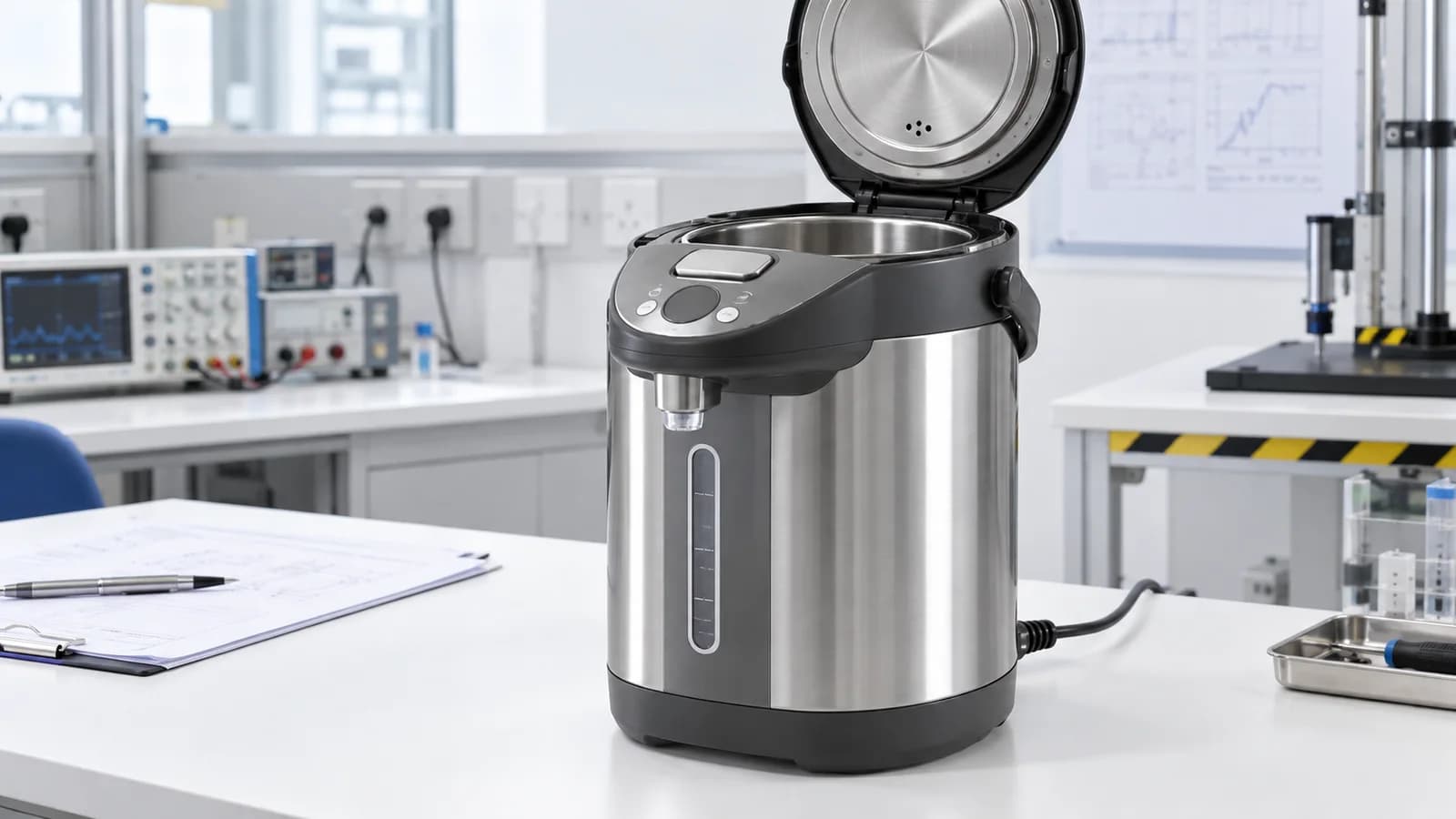
A finished household electric thermopot that stores, electrically heats, keeps warm and dispenses water is generally entered under HTSUS 8516.10.0040, electric storage water heaters. The 2026 Column 1 General rate is Free and Column 2 is 35%. This conclusion assumes a countertop reservoir appliance whose water-heating and dispensing function gives the article its identity. It does not cover a simple kettle, coffee or tea maker, hot-and-cold cooler, plumbed instantaneous heater, commercial boiler or separately imported part. CBP ruling N343740 confirms 8516.10.0040 for a residential storage water-heating system, while HQ 560470 treated a hot-water dispenser in the same provision; the actual reservoir, plumbing, control and dispensing arrangement must still be compared with those facts.
Why HTSUS 8516.10.0040 applies
GRI 1 places an appliance whose objective function is storing and electrically heating water in heading 8516; GRI 6 leads to the U.S. storage-water-heater breakout. The file should show reservoir capacity, rated voltage and wattage, keep-warm temperature, heating element, thermostat, thermal fuse, boil-dry protection, pump or manual dispense mechanism, child lock, inlet arrangement and whether refrigeration exists. Vietnam code 8516.10.11 is not a U.S. ten-digit code. Where a compact product merely boils water and is lifted to pour, HTSUS 8516.79.0000 may be the stronger result; where it prepares coffee or tea, 8516.71 must be tested.
China duties and origin
A Free base rate does not finish a China-origin analysis. Review the Chapter 99 text in force on the entry date. For the 8516.10.00 tariff line, the historic Section 301 framework can require 7.5% under 9903.88.15, and the 2026 forced-labor action can require an additional 12.5% under 9903.05.31, subject to the operative scope, effective date and listed exceptions. Do not calculate a landed-duty total until the current HTS revision, producer/exporter, origin and any exclusion are confirmed. Origin follows substantial transformation; repacking or minor assembly in a third country does not remove Chinese origin. UFLPA screening is separate and can affect metal, electronics and upstream components. MPF and HMF may also apply.
Consumer-product and electrical compliance
There is no universal federal pre-import licence solely because the product is an electric thermopot. The importer remains responsible under the Consumer Product Safety Act, including Section 15(b) hazard reporting. A nationally recognized testing laboratory listing is often commercially required; the applicable standard depends on construction and can involve UL 1026, UL 499 or another product-specific standard, so the model should not be assigned a standard by name alone. The safety record should address scalding, tip-over, pump lock, lid security, steam, dry heating, overheating, grounding or double insulation, cord anchorage and accessible temperatures. State electrical, retailer and insurer requirements remain relevant.
Food-contact materials, FCC and marking
The tank, lid, tubing, spout, seals, coatings, plastics and adhesives that contact hot water should be supported by FDA food-contact status for the intended time and temperature. Digital controls may be unintentional radiators under FCC Part 15; Wi-Fi or Bluetooth requires the appropriate equipment authorization. Country-of-origin marking must satisfy 19 U.S.C. 1304 and 19 CFR part 134. The rating label and instructions should identify capacity, voltage, wattage, model, responsible party, maximum/minimum fill, child lock, steam and burn warnings, cleaning and descaling limits. DOE water-heater efficiency and FTC EnergyGuide rules should be tested against the definitions and capacity in 10 CFR part 430 rather than automatically imposed on every countertop thermopot.
Entry file and commercial description
Keep the contract, invoice, packing list, transport record, bill of materials, manufacturing flow and origin evidence; specification, photos and circuit; reservoir, pump, thermostat, fuse and protection details; safety reports, food-contact declarations, FCC record, label and instructions. Suggested description: “Household electric thermopot/hot-water dispenser, storage reservoir ... L, ... V, ... W, electric resistance heating with keep-warm control, pump dispensing and child lock, no refrigeration and no coffee/tea preparation, model ..., new, country of origin ..., HTSUS 8516.10.0040.” Replace every blank and disclose wireless or filtration functions.
Facts that change the answer
Seek a CBP binding ruling or reclassify when the unit has refrigeration, is connected permanently to a water line, prepares beverages, functions as a kettle, is a large commercial urn, operates under pressure, includes a material filter that changes the principal function, arrives as an unassembled set, or is only a tank, pump, spout, heater, thermostat, board or cord. Tariff classification, Chapter 99, origin, UFLPA, CPSC, FCC, DOE, food-contact and state chemical-warning duties are separate determinations.
Official sources
Sources reviewed September 21, 2026: USITC HTS search for 8516.10; CBP ruling N343740; USTR Section 301 tariff search; CPSC business guidance; FDA food-contact substances; FCC equipment authorization; CBP country-of-origin marking.
Editorial note
Prepared by the Global HS Code Checker Editorial Team for customs-classification, tariff and import-policy research. The correct code and applicable measures may change with the merchandise's actual characteristics, jurisdiction, entry date and supporting record. Verify the current tariff, governing measures and competent customs authority before filing an entry. A reviewer is identified only after a named expert has completed the review.