Quick answer
Classify household electric rice cookers under HTSUS 8516.60.6000 and review base duty, Chapter 99, electrical safety, FCC, food-contact and marking requirements.
Classification and duty conclusion
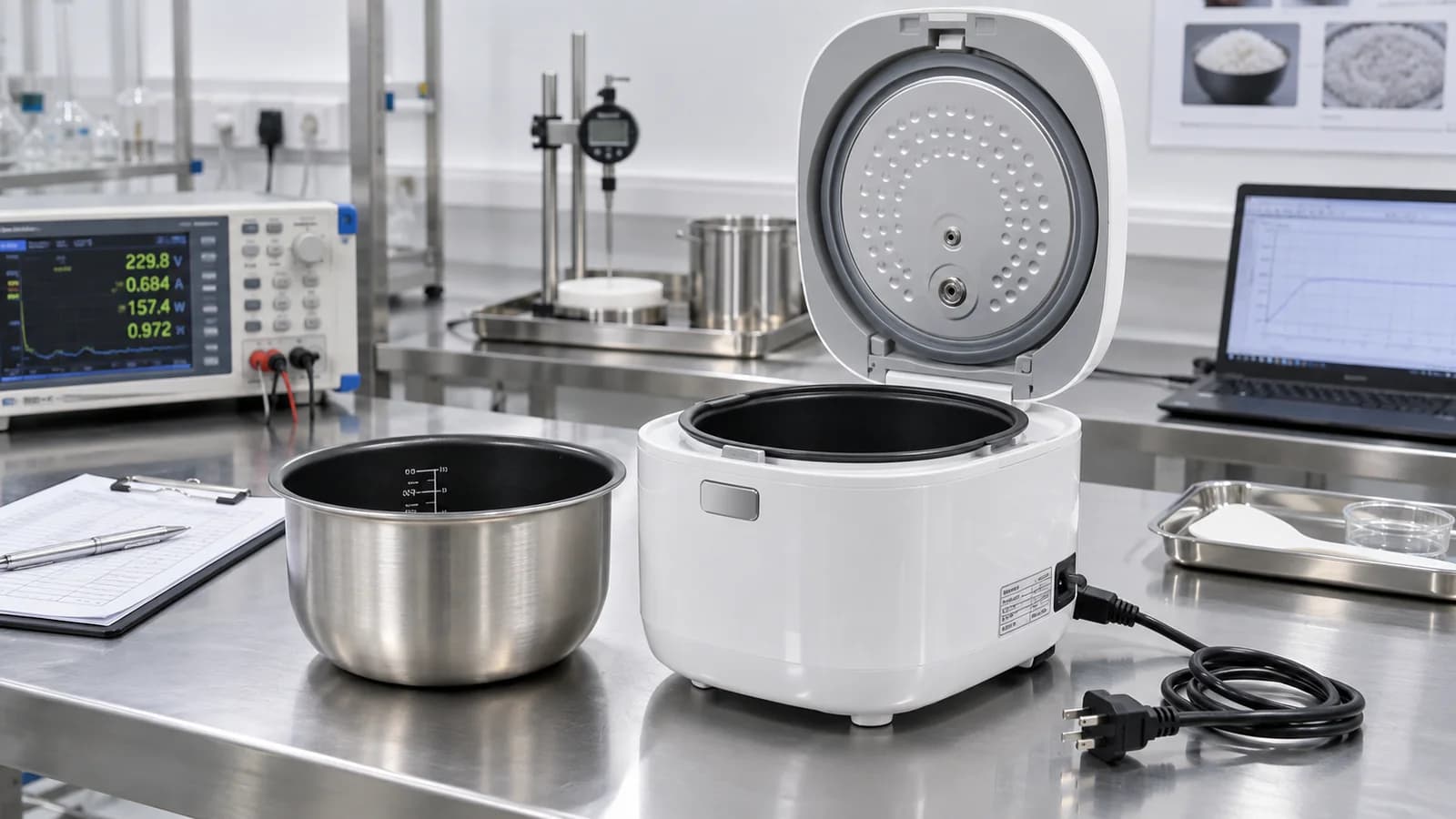
A complete household electric rice cooker whose principal function is cooking rice, including an ordinary keep-warm function, is generally entered under HTSUS 8516.60.6000, Other electrothermic cooking appliances. The 2026 Column 1 General rate is 2.7% and Column 2 is 40%. This conclusion does not cover a separate inner pot, heating plate, control board, commercial rice-production line or an appliance whose principal character is pressure cooking or another process.
Why HTSUS 8516.60.6000 applies
GRI 1 places domestic electrothermic cooking appliances in heading 8516; GRI 6 leads to subheading 8516.60. The United States does not reproduce Vietnam's national breakout 8516.60.10. The entry record should show rated voltage and wattage, bowl capacity, resistance or induction heating, pressure function, control modes, keep-warm operation, accessories and condition at importation. A multifunction appliance must be analyzed from its objective construction and principal cooking function, not its marketing name.
Additional duties and origin
The base rate is not the final landed duty. China-origin merchandise classified in 8516.60.60 must be screened against the current Section 301 Chapter 99 schedule and any exclusion in force on the entry date. The 2026 HTS Chapter 99 also lists 8516.60.60 among derivative steel articles for Section 232 purposes, so the importer must determine the value and origin of covered steel content and report the applicable Chapter 99 line rather than applying a percentage mechanically to the entire appliance. Country of origin requires substantial-transformation analysis; repacking or simple assembly in a third country does not erase Chinese origin. MPF and, for vessel cargo, HMF may also apply.
Federal and state product compliance
There is no general federal pre-import approval simply because the article is a rice cooker, but the importer remains responsible under the Consumer Product Safety Act for a non-defective consumer product and for reporting substantial product hazards. Electrical listing to the applicable UL/ANSI standard is commonly required by retailers, insurers and state or local electrical codes. A digital controller can be an FCC Part 15 unintentional radiator; Wi-Fi or Bluetooth adds intentional-radiator equipment authorization. Smart functions also require cybersecurity and privacy review appropriate to the service offered.
Food-contact parts and labeling
The removable bowl, coating, gasket, steam path and accessories that contact food should be supported by supplier composition and U.S. FDA food-contact compliance evidence for the intended temperature and use. Country-of-origin marking must satisfy 19 U.S.C. 1304 and 19 CFR part 134. The rating label and instructions should identify voltage, wattage, model, manufacturer/importer, burn and steam warnings, pressure-release precautions where relevant, and cleaning limitations. California Proposition 65 and other state warnings require a substance-specific assessment, not a generic sticker.
Entry file and commercial description
Keep the purchase contract, invoice, packing list, transport record, bill of materials, manufacturing flow, origin evidence, product specification, circuit and heater information, bowl/coating declarations, test reports, FCC records and final labels. Suggested description: “Household electric rice cooker, resistance-heated, ... L bowl, ... V, ... W, with keep-warm function, no pressure-cooking function, model ..., country of origin ..., HTSUS 8516.60.6000.” Replace all blanks and disclose pressure or induction construction accurately.
Facts that change the answer
Reclassify or seek a CBP ruling when the shipment consists of parts or an unassembled kit, the machine is commercial or industrial, the cooker incorporates pressure cooking or induction as a defining feature, or the package includes other appliances. Customs classification, Section 301, Section 232 steel-content reporting, FCC authorization and product safety are separate determinations.
Official sources
Sources reviewed September 21, 2026: USITC Harmonized Tariff Schedule; USTR Section 301 investigations; CBP Section 232 trade remedies; CPSC business guidance; FCC equipment authorization; FDA food-contact substances.
Editorial note
Prepared by the Global HS Code Checker Editorial Team for customs-classification, tariff and import-policy research. The correct code and applicable measures may change with the merchandise's actual characteristics, jurisdiction, entry date and supporting record. Verify the current tariff, governing measures and competent customs authority before filing an entry. A reviewer is identified only after a named expert has completed the review.