Quick answer
Classify standalone household electric cooktops and review base duty, Chapter 99, electrical safety, FCC and origin-marking requirements.
Classification and duty conclusion
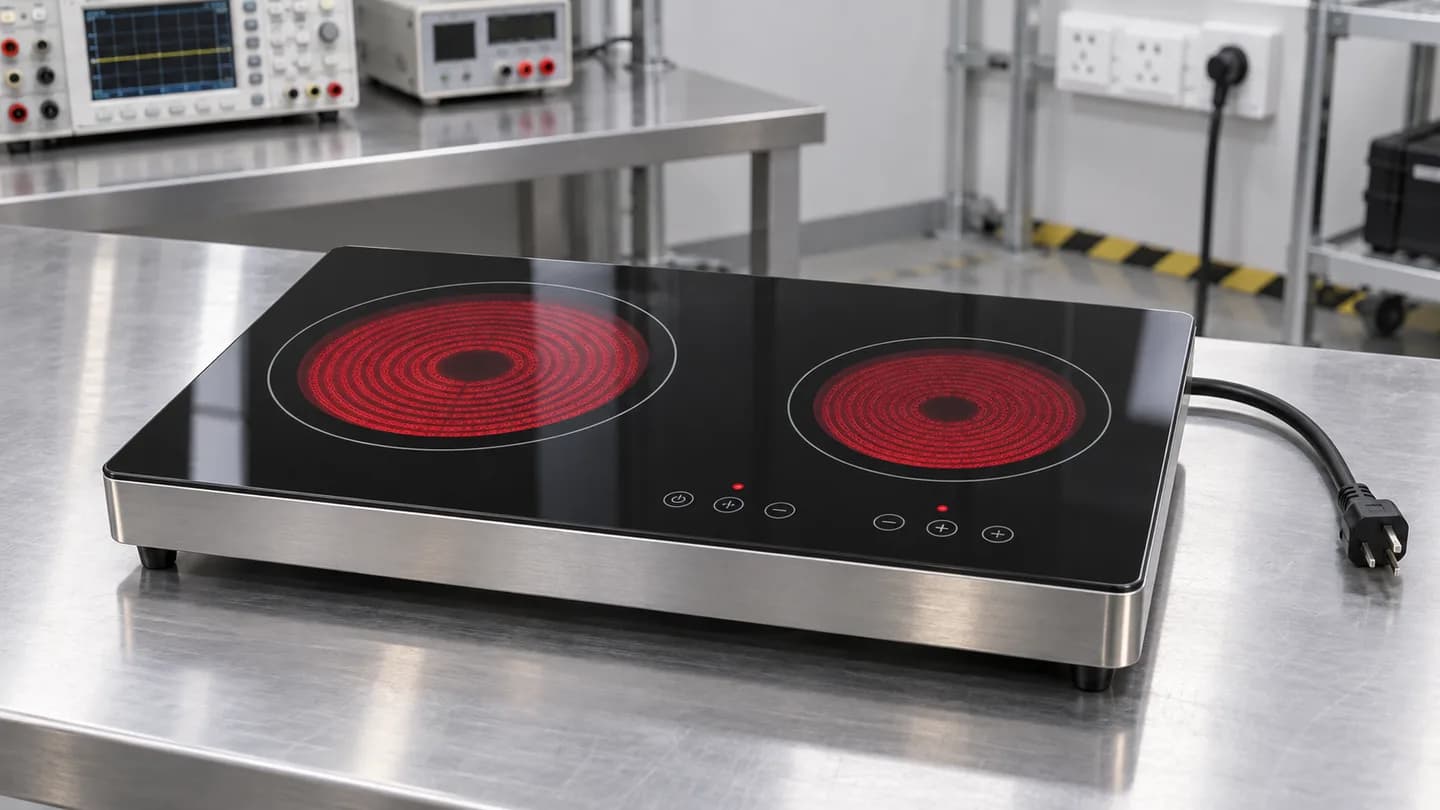
A complete standalone household electric hot plate or cooktop, without an oven, is ordinarily classified in HTSUS 8516.60.6000, the residual provision for other ovens, cookers, cooking plates, boiling rings, grillers and roasters. The 2026 Column 1 General rate is 2.7%. This conclusion assumes a complete resistance or radiant electric cooking appliance. A full range with an oven is instead examined under 8516.60.40xx, where the statistical suffix depends on portability, width and cooktop technology. Do not copy Vietnam code 85166090 into the U.S. entry.
Why the exact construction matters
GRI 1 places electrothermic domestic cooking appliances in heading 8516; GRI 6 then determines the U.S. breakout. CBP ruling N151555 applies 8516.60.6000 to an electrothermic cooking appliance in the residual branch. By contrast, rulings N298195 and N351075 illustrate the 8516.60.40 range/oven branch and the importance of portability, maximum width and radiant or other cooktop construction. The file should identify heating technology, number of zones, voltage, wattage, dimensions, built-in or countertop installation and whether an oven cavity is present.
Additional duties and origin
Country of origin controls marking, trade remedies and admissibility. The importer must review the live Chapter 99 notes and USTR Section 301 status on the entry date, particularly for China-origin goods; a base rate is not a landed-duty total. Assembly or repacking in a third country does not change origin without substantial transformation. Screen the manufacturer, exporter and supply chain for forced-labor risk when relevant and separately check AD/CVD scope by written product description, not merely by HTS number.
Safety, FCC and consumer-product compliance
Household ranges and cooktops are commonly evaluated against UL 858; certification by an OSHA-recognized NRTL is often required by retailers, insurers or local electrical authorities even when it is not itself a universal CBP entry document. The compliance file should address hot surfaces, glass breakage, spill-over, unattended activation, overheating, fire, electric shock, stability and cord protection. CPSC certificate and eFiling obligations apply only when the product is subject to a CPSC-enforced mandatory rule, ban or standard. Wi-Fi or Bluetooth models require a separate FCC equipment-authorization analysis.
Entry file and marking
Keep the commercial invoice, packing list, transport record, valuation support, origin analysis, bill of materials and production flow; product photos, manual, circuit diagram, ratings, test reports, NRTL listing where used, labels and wireless grant information. Mark the article or container with the actual English country of origin under 19 CFR Part 134, subject to the statutory exceptions. Model, factory and critical components in the test file should match the imported units.
Suggested customs description
Suggested description: “Household electric cooktop, two radiant-resistance cooking zones, no oven, countertop/built-in, ... V, ... W, model ..., new; HTSUS reference 8516.60.6000.” Replace placeholders with verified facts. If the unit is a cooking range with an oven, describe width, portability and cooktop type and determine the correct 8516.60.40xx suffix before entry.
Facts that change the answer
Reclassify a gas or mixed-fuel appliance, microwave combination, induction appliance with materially different national breakout, commercial or industrial cooking machine, unassembled set, or separately imported glass top, heating element, control board or other part. Electrical safety, FCC authorization, origin marking, Chapter 99 and AD/CVD are independent checks; one favorable answer does not resolve the others.
Official sources
Sources checked September 22, 2026: USITC 2026 HTS Revision 19; CBP CROSS N151555; CBP CROSS N298195; CBP CROSS N351075; CPSC free-standing kitchen ranges; CPSC certificates and eFiling; FCC equipment authorization; 19 CFR Part 134; USTR Section 301.
Editorial note
Prepared by the Global HS Code Checker Editorial Team for customs-classification, tariff and import-policy research. The correct code and applicable measures may change with the merchandise's actual characteristics, jurisdiction, entry date and supporting record. Verify the current tariff, governing measures and competent customs authority before filing an entry. A reviewer is identified only after a named expert has completed the review.