Classification and customs conclusion
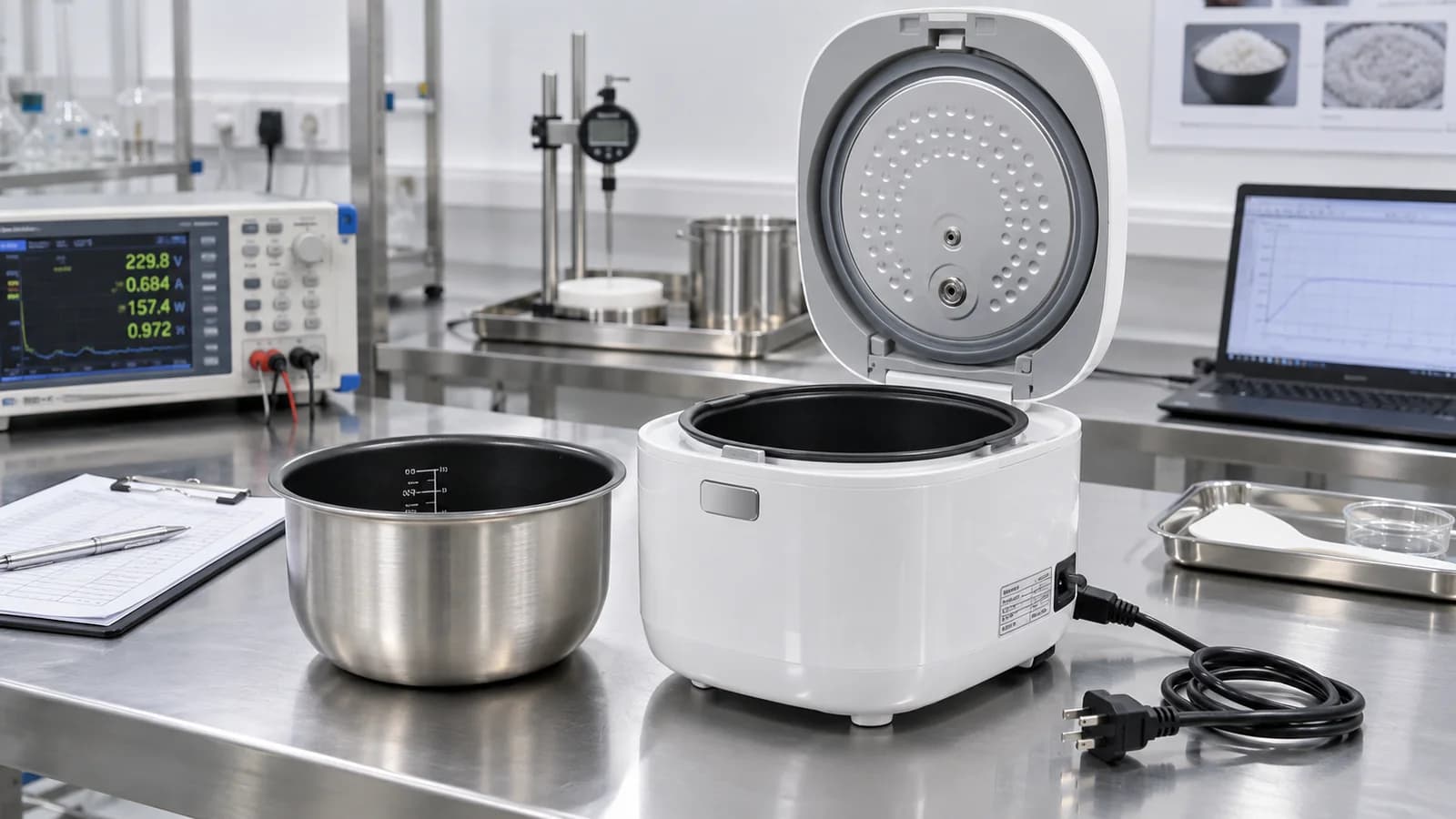
A complete household electric rice cooker whose principal function is cooking rice is generally classified under CN/TARIC 8516609000, other electrothermic cooking appliances. The current third-country duty is 2.7%. The classification assumes a new finished appliance with an ordinary keep-warm function; pressure cookers, industrial equipment, components and multifunction appliances require a fresh analysis.
Duty, origin and import VAT
Import VAT is charged at the rate of the Member State of importation on the customs value plus duty and statutory additions. Preferential duty requires actual originating status and valid proof under the relevant agreement; shipment from a partner country is not enough. TARIC must be checked on the acceptance date for sanctions, suspensions and trade-defence measures.
CE and electrical compliance
Before placing the cooker on the EU market, the importer must verify the Low Voltage Directive 2014/35/EU, EMC Directive 2014/30/EU, RoHS and the General Product Safety Regulation. The technical file should support the applicable EN 60335-1 and EN 60335-2-15 safety standards, EMC tests, risk assessment, EU declaration of conformity, CE marking, traceability and instructions in the destination language. Wi-Fi or Bluetooth also brings the Radio Equipment Directive into scope.
Food-contact and environmental duties
The bowl, coating, gasket, steam path and accessories must comply with Regulation (EC) 1935/2004 and any material-specific measure, including Regulation (EU) 10/2011 for plastics where applicable. The importer also checks WEEE, packaging EPR, ecodesign standby/networked-standby requirements and national producer registration. CE does not cover food-contact migration or waste registration.
Technical and customs file
Retain the invoice, transport and origin records, specification, circuit diagrams, bill of materials, heater and pressure details, safety/EMC/RoHS reports, food-contact declarations and migration tests, EU declaration, labels and instructions. Suggested description: “Household electric rice cooker, resistance-heated, ... L, ... V, ... W, keep-warm function, no pressure function, model ..., new.”
Classification boundaries
Reassess the code and conformity route for pressure cooking, induction heating as a defining technology, commercial capacity, detachable heaters, unassembled kits or separately imported bowls and parts. Customs release is not permission to place a non-compliant appliance on the market.
Official sources
Sources checked September 21, 2026: EU TARIC 8516609000; Low Voltage Directive 2014/35/EU; EMC Directive 2014/30/EU; General Product Safety Regulation (EU) 2023/988; Food-contact Regulation (EC) 1935/2004; RoHS Directive 2011/65/EU; WEEE Directive 2012/19/EU.