EU classification and duty conclusion
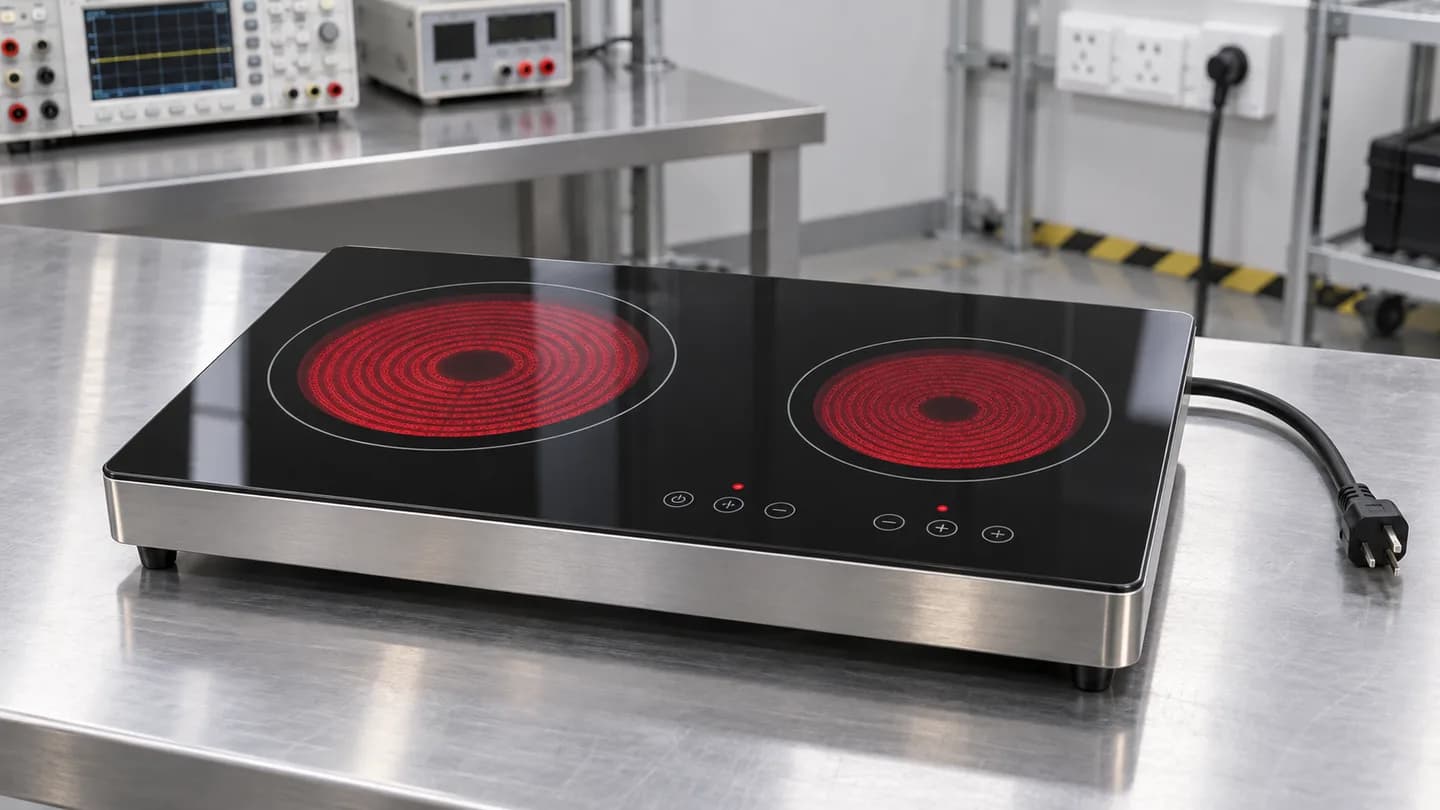
A complete domestic electric cooking plate or hob, using resistance or radiant heat and imported without an oven, is ordinarily classified in CN 8516 60 50 / TARIC 8516605000. The standard third-country duty is generally 2.7%, subject to the live TARIC measure, origin and entry date. This CN code must not be inferred from Vietnam 85166090. An induction hob, cooker incorporating an oven, gas-electric unit, industrial machine or separately imported part requires its own analysis.
Classification boundaries
GRI 1 and 6 require the objective construction to be documented: heating technology, cooking zones, voltage, wattage, dimensions, built-in or portable installation, household design and absence or presence of an oven cavity. Keep drawings, photographs, manual and BOM. “Electric stove” is not precise enough because CN distinguishes cooking plates/hobs from complete cookers and ovens, and parts are classified separately.
Customs duty, VAT and origin
Customs value, origin and preferential proof are separate from classification. Import VAT is charged at the destination Member State rate: for example Germany 19%, France 20%, Spain 21%, Italy 22%, Poland 23% and the Netherlands 21%, subject to domestic rules. An FTA preference requires the product-specific origin rule and valid evidence. Check TARIC for trade-remedy or restriction measures on the declaration date.
CE and product-safety file
Before placing the product on the EU market, the responsible economic operator must complete conformity assessment under the Low Voltage Directive 2014/35/EU and EMC Directive 2014/30/EU, prepare the technical file and EU Declaration of Conformity, and affix CE marking. The file should address hot surfaces, overheating, fire, electric shock, glass failure, spill-over, unintended operation, stability and foreseeable misuse. GPSR 2023/988 adds traceability, responsible-person and market-surveillance duties.
RoHS, WEEE and connected models
Apply RoHS substance restrictions and national WEEE producer-registration, reporting and take-back rules. Wi-Fi or Bluetooth versions move into the Radio Equipment Directive assessment and require radio, EMC, safety and spectrum evidence. Ecodesign or energy-labelling duties apply only if a specific implementing measure covers the model; do not claim a generic label for every hob.
Import file and declaration
Retain invoice, packing list, transport and origin proof, customs value support, product photos, ratings, drawings, circuit diagram, risk assessment, harmonised-standard test reports, EU DoC, CE artwork, labels, instructions, RoHS evidence, WEEE registration and RED documents where applicable. Declaration example: “Domestic electric glass-ceramic hob, two radiant-resistance zones, no oven, built-in/countertop, ...V, ...W, model..., new; CN 85166050.”
Cases requiring reclassification
Reassess induction models where the national declaration data require a different description, cookers with ovens, microwave combinations, gas or mixed-fuel appliances, commercial or industrial equipment, unassembled sets and separately imported glass tops, heating elements or control boards. CE, customs, VAT, WEEE and radio compliance remain independent obligations.
Official EU sources
Sources checked September 22, 2026: EU TARIC; EU tariff classification; Low Voltage Directive 2014/35/EU; EMC Directive 2014/30/EU; GPSR 2023/988; RoHS Directive; WEEE Directive.