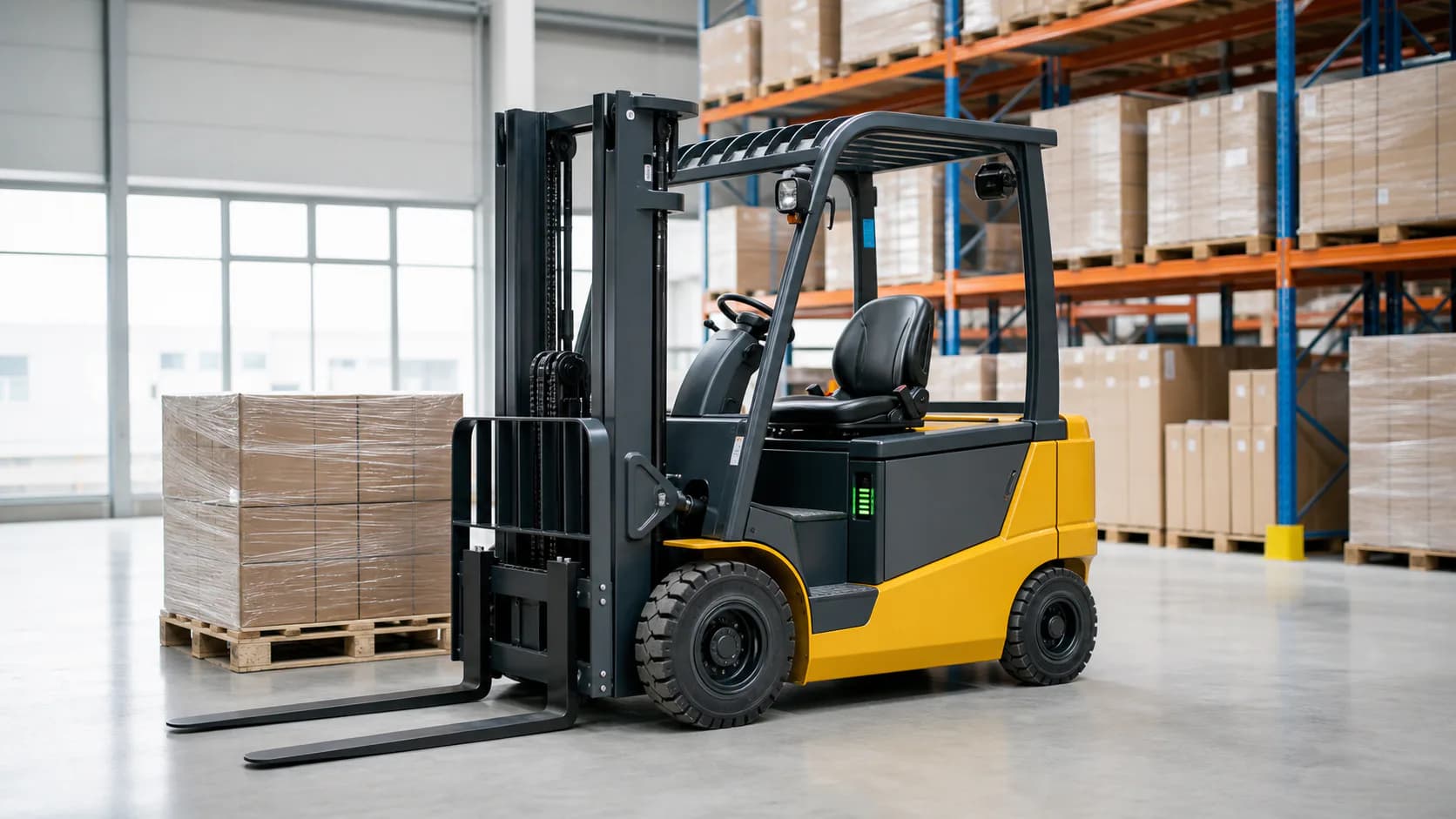
Quick answer: CN code and import
Electric forklift may be classified under the CN code shown below if it matches the stated scope. Verify the goods and live TARIC before declaring an import into European Union.
| Field | Result |
|---|---|
| Product | electric forklift |
| CN (8 digits) | 8427 10 10 / 8427 10 90 |
| TARIC (10 digits) | 8427101000 / 8427109000 |
| Destination market | European Union |
| Status | Conditional classification; verify against the goods and live TARIC |
Jurisdiction and legal date
EU customs classification and the Common Customs Tariff apply in European Union. National VAT, excise, enforcement and market-surveillance rules must still be checked in the Member State of importation. Data checked on 5 September 2026.
Goods analysed
self-propelled electric works truck fitted with lifting equipment.
Facts still required
Confirm the exact technical specification, customs value, origin country, manufacturer, shipment date and destination Member State before filing the declaration.
HS, CN and TARIC levels
The six-digit HS is international; the eight-digit CN code is used for EU tariff classification; the ten-digit TARIC code adds EU measures. An additional TARIC code may also be required.
Candidate-code matrix
| Level | Code | Use |
|---|---|---|
| HS | 842710 | International heading/subheading |
| CN | 8427 10 10 / 8427 10 90 | EU eight-digit classification |
| TARIC | 8427101000 / 8427109000 | EU measures at ten digits; verify additional code |
GIR classification reasoning
Apply GIR 1 from the heading text and legal notes, then GIR 6 at subheading level. The decisive facts are: rider or pedestrian operation, counterbalance/reach design and battery configuration. Sets, incomplete goods and multifunction machines may also require GIR 2 or GIR 3.
Customs duty
Do not hard-code a single duty rate. The payable rate depends on the ten-digit TARIC code, origin, declaration date, tariff preference, quota, suspension and trade measures. Verify the live TARIC result immediately before entry.
Import VAT
Import VAT: No single EU rate; determine the Member State of importation. The taxable amount normally includes customs value, duty and specified incidental costs; national rules control the final calculation.
Excise duty
Excise is not inferred from the heading. Fuel and other excisable products require a separate national excise check; for other products record 'not identified on the stated facts', not a zero rate.
Preferential origin and FTA
Preferential duty requires an applicable EU agreement, satisfaction of the product-specific rule and valid proof of origin. Shipment country alone does not establish preferential origin; use Access2Markets/ROSA with the actual origin.
Trade-defence measures
Search TARIC by exact code and origin for anti-dumping, countervailing and safeguard measures. A measure may depend on manufacturer and an additional code, so a heading-level search is insufficient.
Restrictions and licences
Screen dual-use, sanctions, waste, endangered-species and sector-specific licensing rules against the actual product and parties. No licence conclusion follows from the CN code alone.
Product compliance
Customs clearance does not prove lawful EU market placement. Before sale, confirm conformity assessment, technical documentation, labelling, economic-operator and traceability duties with the customs and market-surveillance authority of the destination Member State.
- Machinery Directive 2006/42/EC
- Battery Regulation (EU) 2023/1542
- work-equipment and battery transport rules
Customs file
Keep the invoice, packing list, transport record, origin evidence, technical datasheet, model photographs, composition/BOM, valuation records, TARIC result dated on entry and all conformity/test documents.
Risks and next steps
A change in material, function, power, composition, age grading, packaging or shipment configuration can change the code and controls. For recurring or high-value imports, seek Binding Tariff Information (BTI).
Official sources and legal limitation
- Combined Nomenclature 2026 — Implementing Regulation (EU) 2025/1926
- EU TARIC — integrated tariff
- Access2Markets — tariffs, origin and import requirements
- Union Customs Code — Regulation (EU) No 952/2013
- EU VAT rates framework
- European Commission — national tax administrations
This is a reasoned preliminary classification, not a customs decision. A definitive duty amount requires the exact TARIC code, origin, customs value, declaration date and destination country.
EU customs counsel review — legal position at 5 September 2026
This opinion concerns importation into the EU customs territory, not every country geographically located in Europe. Iceland, Norway, Switzerland, Türkiye and the United Kingdom use distinct tariff and/or customs arrangements. The destination Member State has not been identified; therefore there is insufficient information to determine national import VAT, excise, enforcement authority or additional national product rules.
1. Executive legal conclusion
On the stated facts, electric forklift is provisionally classified under CN 8427 10 10 / 8427 10 90 and TARIC 8427101000 / 8427109000. This is not a binding determination. The conclusion applies only if the goods match this scope: self-propelled electric works truck fitted with lifting equipment. A ten-digit TARIC result must be rerun on the declaration date with origin, destination and any manufacturer/additional-code data.
2. Facts that control the opinion
The decisive technical variables are rider or pedestrian operation, counterbalance/reach design and battery configuration. The file must also identify the importer of record, manufacturer, non-preferential origin, exporting country, destination Member State, customs procedure, transaction value, Incoterm, quantities and declaration date. Without them, the amount payable and all market-access measures cannot be concluded officially.
3. Classification hierarchy and legal method
HS fixes the first six digits; the annual Combined Nomenclature fixes the EU eight-digit code; TARIC adds the ninth and tenth digits and operational EU measures. General Rules 1 and 6 require the wording of headings/subheadings and Section/Chapter Notes to be applied before trade names. GIR 2 may govern incomplete/unassembled goods; GIR 3 applies only where two or more headings remain legally available. Classification Regulations, CN Explanatory Notes, relevant CJEU judgments and BTI practice are persuasive or binding according to their legal status and facts.
| Classification level | Candidate | Legal function | Verification required |
|---|---|---|---|
| HS | 842710 | International six-digit subheading | Heading, Section/Chapter Notes and HS Explanatory Notes |
| CN | 8427 10 10 / 8427 10 90 | EU eight-digit tariff/statistical nomenclature for 2026 | CN wording, CN Notes and classification regulations |
| TARIC | 8427101000 / 8427109000 | Ten-digit operational tariff line | Origin, date, quota/suspension, remedy and additional code |
| Alternative | Not safely determinable from the short description | Applies if material, principal function or presentation differs | Obtain datasheet, catalogue, photographs, BOM and samples |
4. Customs duty, VAT, excise and additional charges
No single percentage is stated as a universal rate because duty is time-, origin- and measure-specific, while VAT and excise are partly national. The customs value is determined under UCC Articles 70–74. Import VAT generally uses the customs value plus specified duties and incidental expenses under VAT Directive Articles 85–86, subject to national implementation.
| Charge | Rate | Tax base | Conditions | Effective date | Official source |
|---|---|---|---|---|---|
| Common Customs Tariff duty | Live TARIC result; not fixed by this article | Customs value under UCC Arts 70–74 | Exact TARIC, origin, date, procedure, preference/quota/suspension | Declaration date | EU TARIC — integrated tariff and live measures |
| Import VAT | Destination Member State rate; not one EU-wide rate | VAT Directive Arts 85–86 and national rules | Member State, product rate, deferment/postponed accounting | Import date | VAT Directive 2006/112/EC |
| Excise duty | Product- and Member-State-specific | National implementation and fiscal quantity/value rules | Relevant mainly for energy products, alcohol and tobacco | Tax-point date | Excise duties — European Commission |
| Anti-dumping/countervailing/safeguard | Only if the live measure matches | Basis stated in the measure | Full code, origin, exporter/manufacturer and additional TARIC code | Measure validity date | EU TARIC — integrated tariff and live measures |
| CBAM financial obligation | Only Annex I goods and applicable thresholds/rules | Verified/default embedded emissions | Authorised declarant and definitive-regime requirements | From 1 January 2026 | CBAM definitive regime — Regulation (EU) 2023/956 and Commission guidance |
5. Origin and preferential tariff
Non-preferential origin is governed by UCC Articles 59–63 and may trigger marking, quotas or trade defence. Preferential origin under UCC Article 64 requires an applicable agreement or unilateral arrangement, satisfaction of the product-specific rule and a valid proof. Country of dispatch, seller address and “Made in” marking do not alone prove origin. For Vietnam-origin goods, test the EU–Vietnam FTA Protocol on origin against the final CN classification, input classifications and actual production records before using an origin statement or EUR.1 route.
6. Trade-remedy and sanctions review
Run TARIC using the complete line and declared origin. A measure may depend on the producer, exporter, product-control number or additional TARIC code, so a CN-only search is legally incomplete. Screen all parties, ownership/control and routing against current EU sanctions; screen technical goods against Regulation (EU) 2021/821 on dual-use controls. Transshipment does not change origin without legally sufficient production.
7. CBAM, EUDR and environmental measures
Screen CBAM only against Annex I CN codes, EUDR only against Annex I products and trade remedies only in live TARIC. Component materials do not automatically bring a finished product into those regimes. CBAM's definitive regime operates from 1 January 2026, but only for goods legally within its product scope and applicable thresholds. Waste classification and shipment controls must be examined separately where goods are used, defective, discarded or shipped for recovery.
8. Import-control and market-access matrix
| Policy | Applies? | Competent authority | Required file/authorisation | Timing | Legal basis |
|---|---|---|---|---|---|
| Customs classification and TARIC measures | Yes | Customs authority of destination Member State | EORI, declaration, invoice, transport record, technical classification file | Before/at declaration | UCC; Regulation (EEC) 2658/87; CN 2026; TARIC |
| Preferential origin | Conditional | Customs authority | Product-specific-rule calculation and valid proof of origin | Claim date; retain for verification | UCC Art 64 and applicable FTA protocol |
| Import VAT / excise | Conditional and national | Tax/customs authority of destination Member State | VAT/excise registration, guarantee or movement documents if required | Before import or tax point | Directive 2006/112/EC; Directives 2020/262 and 2003/96/EC where relevant |
| Trade defence | Conditional | Customs; European Commission DG Trade | Producer/exporter identity and additional TARIC code evidence | At declaration | Live TARIC and the measure-specific regulation |
| CBAM / EUDR | Scope-dependent | National competent authority / Commission systems | Authorisation, emissions or due-diligence data where legally required | Before import/market placement and statutory reporting date | Regulations (EU) 2023/956 and 2023/1115 |
| Product conformity / market surveillance | Scope-dependent, separate from customs release | Market-surveillance authority of destination Member State | Technical file, conformity assessment, declaration, labels/CE and responsible economic operator | Before placing on the EU market | Product-specific acts; Regulation (EU) 2019/1020; GPSR where applicable |
9. Product-specific conformity opinion
- Machinery Directive 2006/42/EC
- Battery Regulation (EU) 2023/1542
- work-equipment and battery transport rules
- Regulation (EU) 2023/1542 applies in phases. Determine the battery category, capacity, incorporated/standalone status and the obligation date before claiming conformity.
- Dangerous-goods transport compliance (including UN 38.3 where applicable) is separate from customs classification and EU market-access conformity.
10. Minimum defensible import file
- Commercial invoice, packing list, transport document, Incoterm and customs-valuation evidence.
- Manufacturer datasheet, model number, photographs, composition/BOM, operating principle, power/capacity and condition as imported.
- Non-preferential-origin analysis; preferential rule calculation and proof if a preference is claimed.
- Dated TARIC printout showing code, origin, destination, measures and additional codes.
- EU declaration of conformity, test reports, technical file, labels/instructions, importer/EU responsible-person details and producer-registration evidence where applicable.
- CBAM, EUDR, sanctions, dual-use, REACH/CLP, waste or food-control records where the scope test is positive.
11. Risk assessment and practical recommendation
The main risks are an overbroad product description, copying a foreign ten-digit code, omitting the additional TARIC code, treating dispatch as origin, claiming an FTA without a product-specific-rule file, and assuming customs release equals market conformity. For recurring, high-value or classification-sensitive imports, request a BTI under UCC Articles 33–34 before shipment and declare consistently with the decision. Recheck the live measures immediately before each filing.
12. Primary legal sources and limits
- Combined Nomenclature 2026 — Commission Implementing Regulation (EU) 2025/1926
- EU TARIC — integrated tariff and live measures
- Access2Markets — tariffs, origin, taxes, formalities and product requirements
- Union Customs Code — Regulation (EU) No 952/2013
- UCC Delegated Regulation (EU) 2015/2446
- Market Surveillance Regulation (EU) 2019/1020
- General Product Safety Regulation (EU) 2023/988
- Binding Tariff Information (BTI) — European Commission
This publication is a reasoned compliance guide, not a BTI, customs decision or opinion on a fully documented transaction. A final conclusion requires the missing facts identified above and the law/data in force on the actual declaration and market-placement dates.