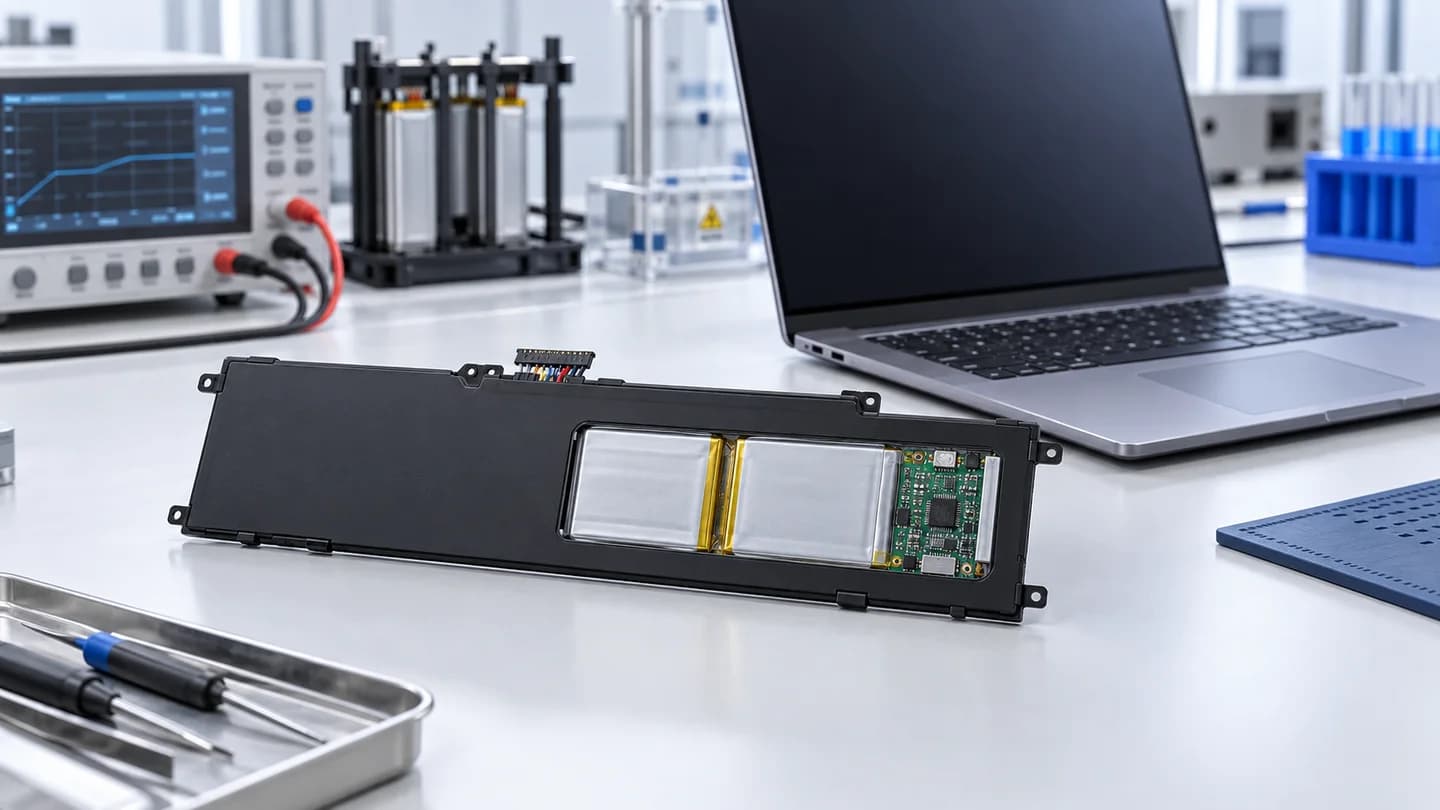
Classification and duty conclusion
A complete rechargeable lithium-ion pack imported separately for a laptop is normally classified in CN 8507 60 00 / TARIC 8507600000. The standard third-country duty must be checked in TARIC on the declaration date; import VAT is charged at the Member State rate. This conclusion excludes primary lithium batteries, power banks, bare cells, batteries already installed in laptops, parts, damaged packs and waste batteries.
CN and TARIC boundary
GRI 1 and 6 classify the electrochemical accumulator in heading 8507 even though it has a BMS, housing and laptop-specific connector. The technical file should identify chemistry, voltage, Ah, Wh, cell count and configuration, BMS, connector, dimensions, weight and compatible computers. A marketing description such as “notebook spare part” does not move an article expressly described by heading 8507 to a computer-parts heading.
Duty, origin and VAT
EVFTA preference requires genuine preferential origin, the product-specific rule, non-alteration and valid proof; shipment from Vietnam alone is insufficient. VAT is calculated on customs value, duty and statutory additions. TARIC must also be checked by origin and date for trade measures. A pack assembled from non-originating cells does not automatically acquire preferential origin merely because the housing and BMS were added in another country.
Battery Regulation compliance
A laptop pack is ordinarily a rechargeable portable battery under Regulation (EU) 2023/1542. The economic operator must address conformity assessment, technical documentation, EU declaration of conformity, CE marking, identification and traceability, applicable substance and performance requirements, the separate-collection symbol, 2026 labelling milestones and producer-registration/EPR duties in each Member State. The QR-code requirement starts from 18 February 2027; it should not be presented as already mandatory throughout 2026.
Dangerous-goods transport
A battery transported alone is generally UN 3480; packed with or contained in equipment may be UN 3481. UN 38.3 design testing and test-summary availability, Wh rating, short-circuit protection, secure packaging, marks, labels, documents and modal limits must follow ADR for road, IMDG for sea and ICAO/IATA for air. Standalone lithium-ion batteries face passenger-aircraft and state-of-charge restrictions; damaged or defective batteries require a special assessment.
Importer file and declaration
Retain customs and origin documents; cell and pack specifications; BOM, factory and traceability; voltage, Ah, Wh and BMS evidence; safety and performance testing; EU conformity assessment, declaration and labels; producer registration; UN 38.3 report/test summary, SDS and transport file. Suggested description: “Rechargeable lithium-ion battery pack for laptop computers, ... V, ... Ah, ... Wh, ... cells, with BMS and dedicated connector, model ..., new, origin ...; CN 85076000.”
When to reassess
Reassess bare cells, primary lithium-metal batteries, power banks, UPS products, batteries built into computers, BMS or housings imported separately, used packs, waste, damaged/defective batteries or a pack exceeding portable-battery criteria. Customs classification, the Battery Regulation, national EPR and dangerous-goods carriage are independent obligations.
Official sources
Sources reviewed September 22, 2026: EU TARIC; Regulation (EU) 2023/1542; ADR 2025; European Commission batteries; IATA lithium batteries.