Classification and duty conclusion
A bare packaged CPU is normally an electronic integrated processor of CN 8542 31. A populated laptop motherboard that remains only a part may fall in CN 8473 30 20 as an electronic assembly; if it already has the objective characteristics of an ADP processing unit, heading 8471 50 must be considered. The common customs duty for the principal ITA branches is generally 0%. Import VAT applies at the rate of the Member State of import.
Chip, module or complete unit
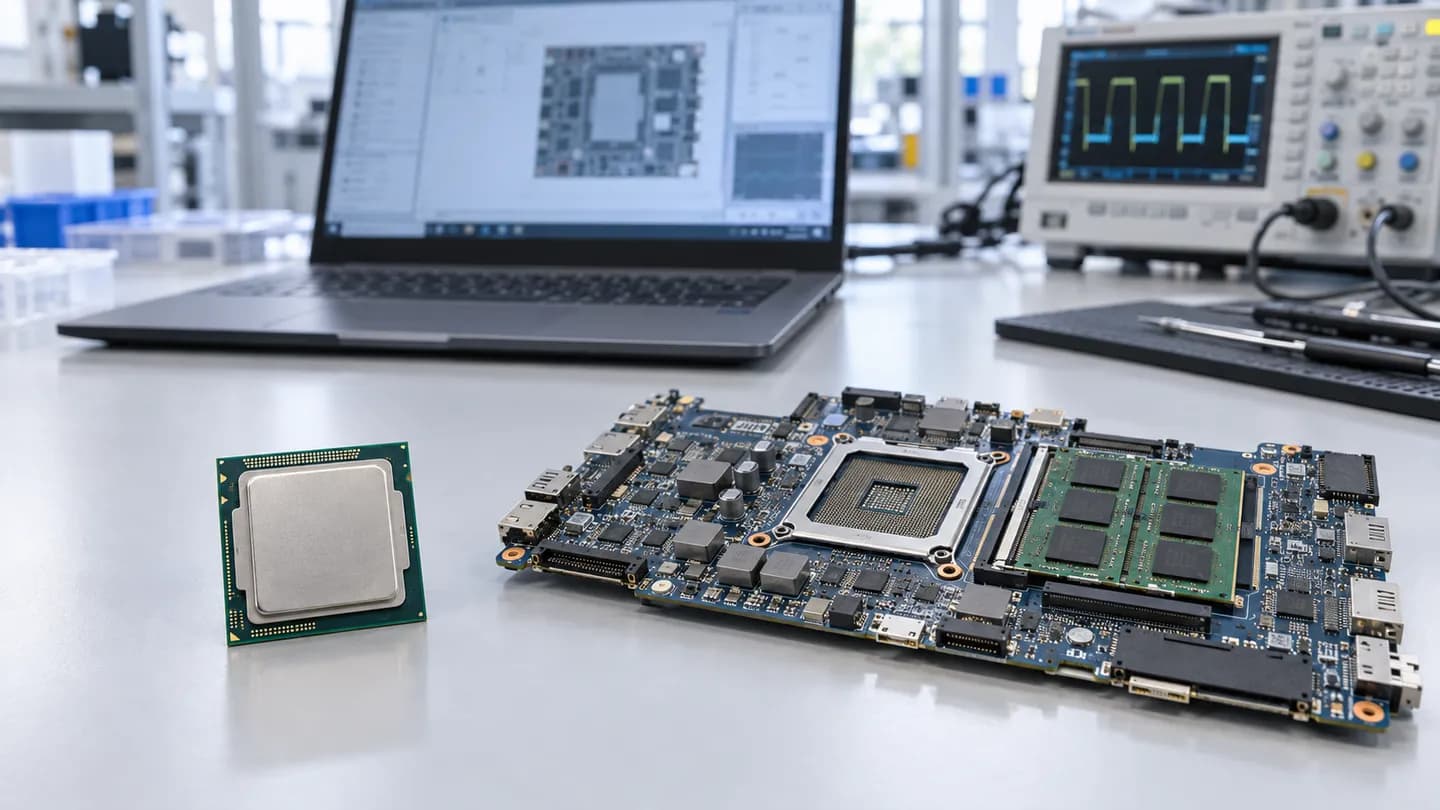
Classification follows the condition at import. A CPU soldered to a motherboard is not declared separately. Distinguish wafer or die, packaged IC, PCB with CPU and RAM, and a device with enclosure, power and data interfaces. Photographs, block diagram, BOM, processing function, memory, interfaces and independent operating capability decide the branch.
Duty, origin and VAT
Zero duty does not remove customs valuation, origin or VAT. VAT is calculated on customs value plus duty and statutory additions. Preference requires the product-specific origin rule and valid evidence, although it cannot reduce a zero duty. Document wafer fabrication, packaging, testing and PCB assembly; shipment or relabelling alone does not confer origin.
RoHS, REACH and CE boundary
A bare chip is not itself a finished EEE automatically bearing CE. A processor board placed on the EU market must be assessed for its actual status and support RoHS and REACH obligations; a finished external device may trigger EMC, LVD where voltage thresholds are met, ecodesign or WEEE. Declarations must cover the exact configuration, not only the CPU family.
Dual-use and sanctions screening
High-performance AI accelerators, radiation-hardened devices and military designs require a separate check under Regulation (EU) 2021/821, sanctions and end-user/end-use rules. These are mainly export and transfer controls, but sanctions, procurement and supply-chain restrictions can affect an import transaction. CN code alone never proves that an item is controlled or uncontrolled.
Importer file
Keep invoice, packing list, transport, EORI and valuation file; exact part-number datasheet; package or PCB photographs and drawings; architecture, performance, memory, bandwidth, interfaces, power and cooling; BOM and manufacturing locations; origin evidence; RoHS/REACH declarations and technical file; sanctions and dual-use screening where relevant.
Customs description
Describe a chip as “electronic integrated circuit central processor for laptop computers, BGA, part number ..., not mounted on PCB, new”. Describe a module as “electronic assembly principally used with laptop computers, incorporating CPU ..., ... GB RAM, power circuitry and connector ..., model ..., new”.
Official sources
Sources checked 22 September 2026: EU TARIC; EU CLASS; RoHS Directive; REACH; EU Dual-use Regulation.