EU classification conclusion
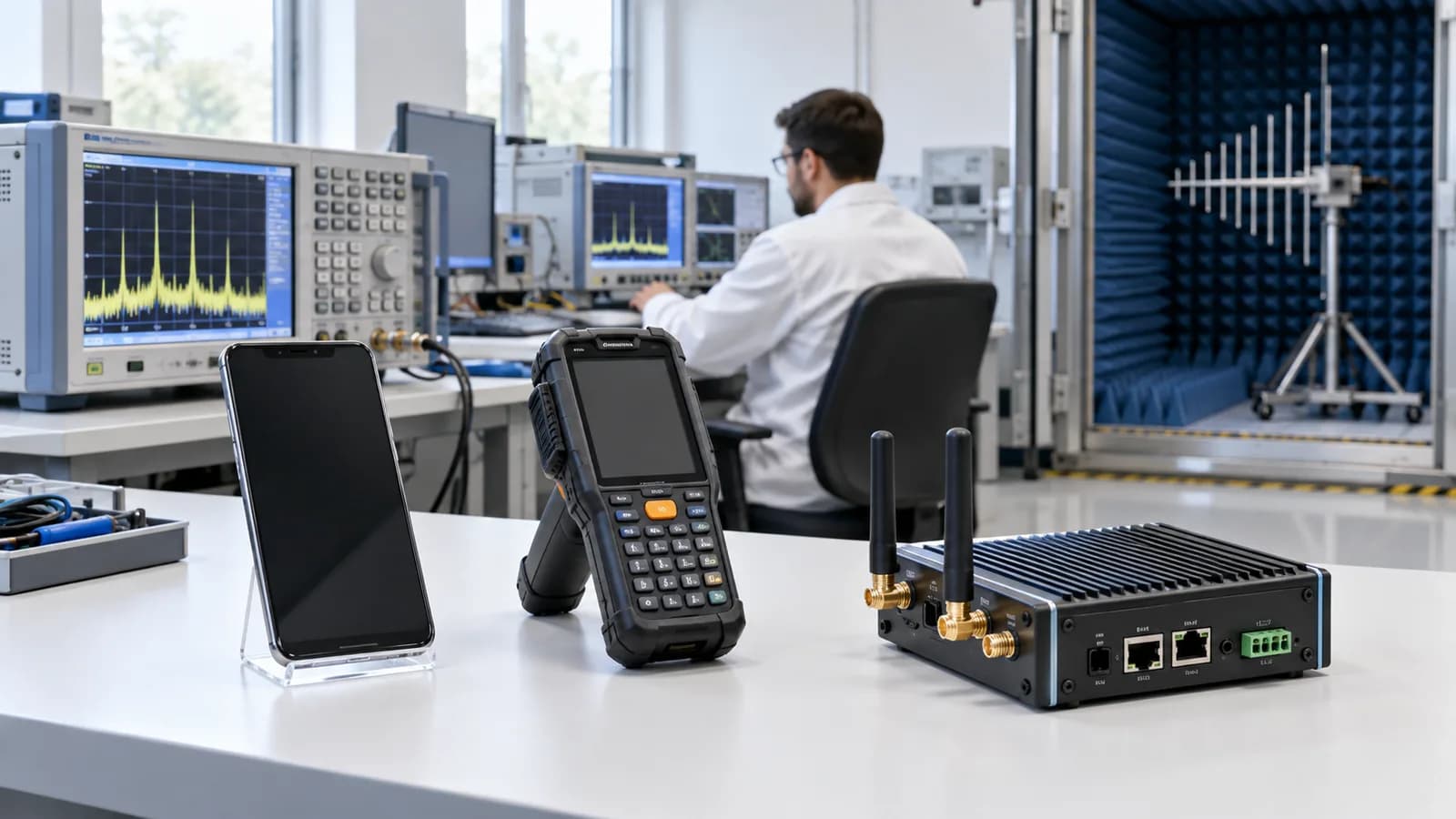
A land mobile terminal does not have a single EU commodity code. Smartphones normally fall in CN 8517 13 00, other telephones for cellular or other wireless networks in 8517 14 00, and non-telephone data or IoT terminals generally in 8517 62 00. TARIC measures and any national statistical requirements must be checked on the declaration date. Modules, parts and equipment whose principal function is described elsewhere require a separate classification analysis.
CN branches and technical evidence
Document voice capability, operating system, SIM/eSIM, display and controls, cellular standards, frequency bands, power, antenna, Ethernet/Wi-Fi interfaces and use. Apply GIR 1 and 6 to the condition as presented. A rugged terminal with telephone characteristics is not automatically data apparatus, while a router or telemetry gateway without telephone character should not be declared as a smartphone.
Customs duty, origin and import VAT
The conventional third-country duty for these main CN 8517 lines is generally 0%, subject to live TARIC verification. Preferential origin, sanctions and trade-defence measures remain separate. Import VAT is charged at the rate of the Member State of import or under the applicable postponed-accounting arrangement. Customs value may include royalties, licence payments and assists where the Union Customs Code conditions are met.
RED, cybersecurity and CE marking
Radio equipment placed on the EU market must comply with Directive 2014/53/EU: safety, EMC, efficient spectrum use, technical documentation, EU declaration of conformity, CE marking, traceability and language instructions. The importer must verify conformity before placing the product on the market and keep records for ten years. RED cybersecurity requirements applicable from 1 August 2025 must be assessed for internet-connected equipment until the relevant Cyber Resilience Act transition changes the framework.
Smartphones, batteries and environmental duties
Handheld mobile phones are subject to the USB-C common-charger rules from 28 December 2024. Smartphone and certain mobile-phone ecodesign and energy-labelling rules apply from 20 June 2025. RoHS, WEEE, REACH and Regulation (EU) 2023/1542 on batteries may apply in parallel. A module's radio test report does not by itself establish conformity of the final host product.
Importer's technical file
Keep the invoice, transport and origin records, complete technical specification, risk assessment, block diagram, band/power/antenna table, harmonised-standard test reports, EU declaration, label artwork, importer details, battery records and translated instructions. Suggested non-phone description: “Cellular data terminal for 4G/5G transmission and reception, SIM/eSIM capable, not principally a telephone, model…, new.” A BTI is appropriate for repeated imports near the telephone/data-apparatus boundary.
Official sources
Sources checked 21 September 2026: EU TARIC, Radio Equipment Directive 2014/53/EU, EU common-charger rules and Regulation (EU) 2023/1670; European Commission RED page. This analysis does not replace a BTI or conformity assessment.