Classification and customs conclusion
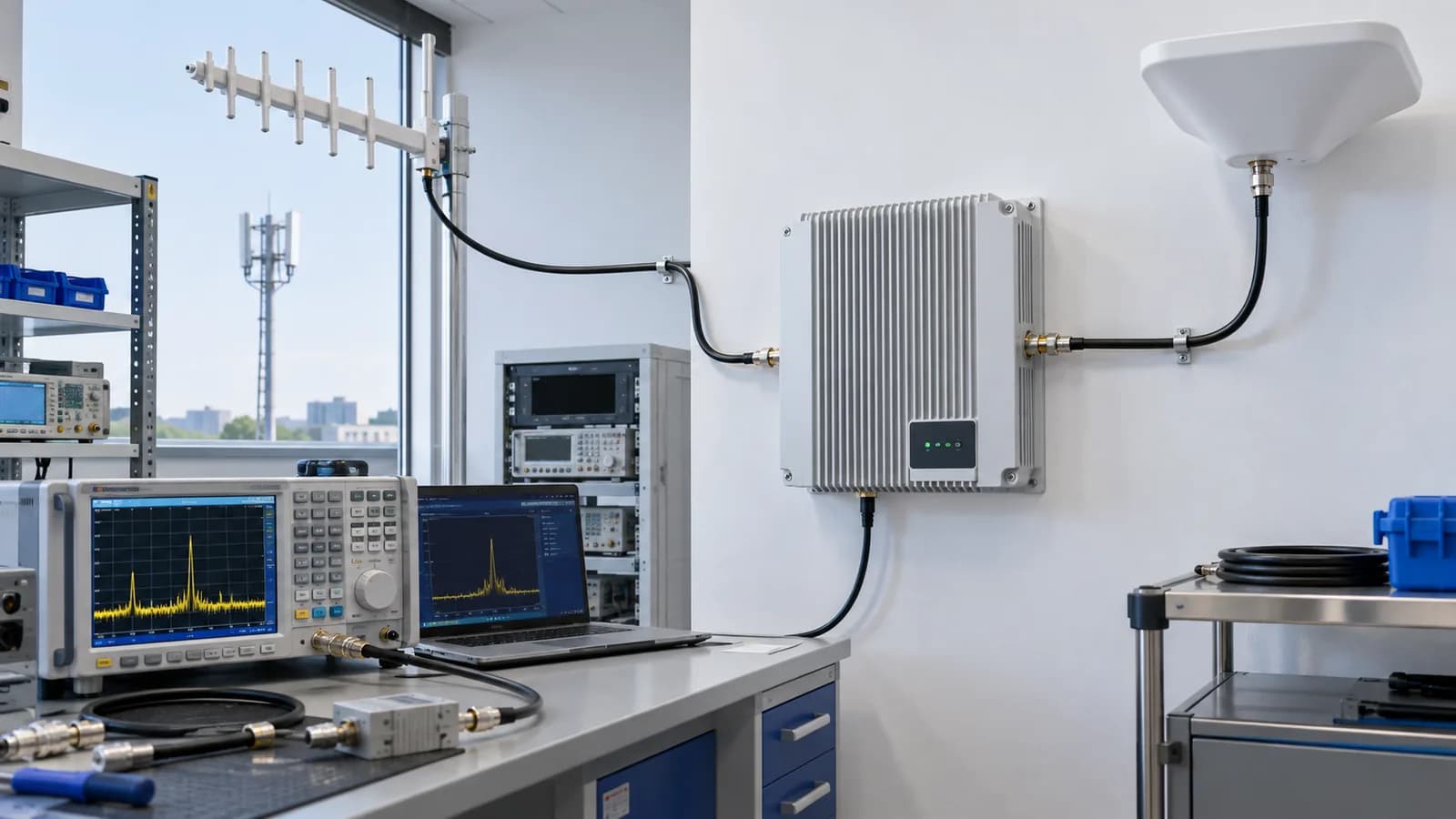
A complete bidirectional GSM 2G/2.5G repeater that receives, amplifies and retransmits cellular signals is normally examined in CN 8517 62 00 and TARIC 8517620000. The conventional third-country customs duty is generally 0%, subject to the live TARIC record on the declaration date. A national code such as Vietnam 85176259 cannot be copied into an EU declaration. Antennas, coaxial cables, splitters, combiners, power supplies and RF modules entered separately require their own classification.
Technical evidence for CN 85176200
The technical file must establish the supported standards, uplink/downlink bands, bandwidth, output power, gain, automatic gain control, oscillation protection, antenna configuration, management interface and imported configuration. GRI 1 and 6 apply to the objective characteristics at import. A base station, remote radio unit, optical DAS component or passive amplifier may follow a different analysis. Binding Tariff Information is appropriate where architecture or recurring value makes the distinction material.
Duty, VAT and origin
Import VAT is collected under the Member State of import: standard examples are Germany 19%, France 20%, Spain 21%, Italy 22%, Poland 23% and the Netherlands 21%. The taxable amount generally includes customs value, duty and specified incidental costs. Origin must be substantiated for preferences, sanctions, marking and trade measures. Zero conventional duty does not remove customs valuation, origin, import declaration or VAT obligations.
RED conformity before placing on the market
The repeater is radio equipment under Directive 2014/53/EU. Before placement on the EU market, the manufacturer/importer must demonstrate Article 3 requirements for health and safety, electromagnetic compatibility and effective, efficient spectrum use; prepare the technical documentation and EU Declaration of Conformity; apply CE and traceability information; and provide instructions in the required destination language. Applicable harmonised ETSI standards depend on the supported GSM bands and product architecture. A module report or non-EU certificate does not automatically cover the finished repeater.
A CE mark is not authority to retransmit a mobile network
CE conformity concerns the product, not the right to use an operator's licensed spectrum. Activating a cellular repeater may require the mobile network operator's consent and compliance with the national spectrum regulator's licence framework. An importer should document the network operator, installation site, frequencies, antenna plan, isolation and interference shutdown procedure before supply. Unauthorised equipment can cause harmful interference and be withdrawn, disabled or sanctioned even if the customs entry and CE paperwork are complete.
Import dossier and declaration
Keep the invoice, transport and origin evidence, customs-value support, technical specification, block diagram, band/power/gain/antenna table, test reports, risk assessment, EU Declaration of Conformity, CE artwork, labels and operator/installer approvals. Suggested description: “Bidirectional GSM 2G/2.5G mobile-network repeater, receives and retransmits uplink/downlink signals, bands ..., output ... dBm, gain ... dB, model ..., new; CN 8517 62 00.” Reassess multitechnology, optical and separately entered components.
Official EU sources
Sources checked September 22, 2026: EU TARIC; Radio Equipment Directive 2014/53/EU; harmonised standards for radio equipment; EU Binding Tariff Information. National spectrum-operation requirements must also be checked with the regulator in the Member State where the equipment will be installed.