Quick answer
U.S. classification, 3.4% base duty, Chapter 99 screening, 49 CFR 173.185, UN 38.3, consumer safety and origin marking for replacement laptop batteries.
Classification and duty conclusion
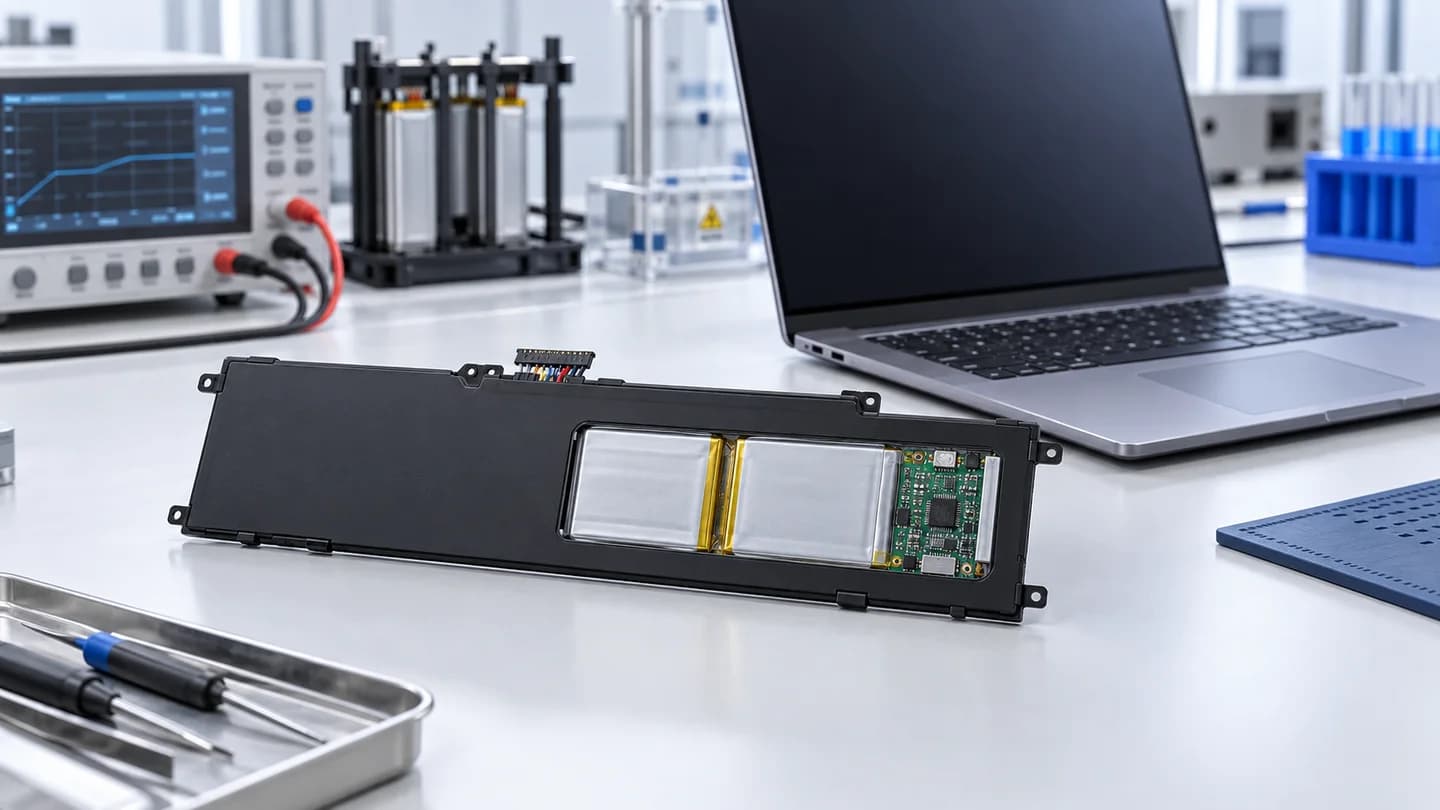
A new rechargeable lithium-ion battery pack imported separately and designed to power a laptop is ordinarily classified in HTSUS 8507.60.0020, other lithium-ion batteries. The 2026 Column 1 General rate is 3.4% and Column 2 is 35%. This conclusion assumes a complete pack containing cells, protection/BMS, housing and laptop connector; it does not cover a laptop containing its battery, primary lithium cells, a power bank, loose parts, or damaged or waste batteries.
Why heading 8507 controls
GRI 1 places the rechargeable electrochemical pack in heading 8507 and GRI 6 leads to the lithium-ion provision. Section XVI Note 2(a) prevents treatment as a computer part of heading 8473 when the article is itself described in heading 8507. CBP ruling N351928 classified a complete lithium-ion pack with cells, PCB and connectors in 8507.60.0020, and CBP's 2024 Customs Bulletin confirms that lithium-ion cells are themselves batteries rather than heading 8507 parts. The file should identify chemistry, voltage, Ah, Wh, cell configuration, BMS, connector and compatible laptop models.
Chapter 99 and origin
The 3.4% rate is only the base layer. China- or Hong Kong-origin merchandise requires entry-date review of the current Chapter 99 headings, including Section 301 and any IEEPA or reciprocal-tariff measure then in force; do not copy a 2025 additional rate into a 2026 entry without checking the current U.S. notes and exclusions. Origin depends on the production of the cells and substantial transformation of the pack, not the shipping country. Marking must comply with 19 U.S.C. 1304 and 19 CFR part 134. MPF and, for vessel cargo, HMF are separate.
Transport under 49 CFR 173.185
A battery offered alone for transportation is generally UN 3480; a battery packed with or contained in equipment may be UN 3481 when the facts satisfy that description. Under 49 CFR 173.185, the design type must pass UN 38.3 testing and the manufacturer or distributor must make the prescribed test summary available. Terminals must be protected against short circuit, the battery secured against movement and damage, and marks, labels, documents, quantity limits, state-of-charge limits and cargo-aircraft restrictions applied for the transport mode. Damaged, defective and recalled batteries follow stricter rules.
Product safety and market evidence
There is no blanket federal pre-import approval merely because the article is a replacement laptop battery. Nevertheless, the importer must address Consumer Product Safety Act defect reporting and maintain a defensible safety file. IEC 62133-2, UL 2054 and the applicable laptop-system standards are commonly used evidence, but a voluntary certification claim must match the exact pack, cell, factory and BMS. CPSC's button-cell rule is not a general laptop-battery rule. California Proposition 65 requires a substance-specific assessment, not an automatic warning.
Entry and compliance file
Retain invoice, packing list, valuation and origin records; pack and cell specifications; manufacturing flow and bill of materials; voltage, Ah, Wh and energy-density data; BMS schematic and protective functions; compatible laptop list; UN 38.3 report and test summary; SDS; transport classification, packaging and labels; safety reports, traceability and recall plan. Suggested description: “Rechargeable lithium-ion battery pack for laptop computers, ... V, ... Ah, ... Wh, ... cells with BMS and connector, model ..., new, origin ..., HTSUS 8507.60.0020.”
Facts that change the answer
Reassess classification and controls for bare cells, primary lithium-metal batteries, power banks, UPS units, battery packs with another principal function, batteries installed in laptops, separately imported BMS or housings, used batteries, waste, prototypes, or damaged/defective/recalled packs. Customs classification, Chapter 99, origin marking, product safety and hazardous-material transportation are separate legal gates.
Official sources
Sources reviewed September 22, 2026: USITC HTSUS; CBP ruling N351928; CBP Customs Bulletin on lithium-ion cells; 49 CFR 173.185; PHMSA lithium-battery resources; CPSC business guidance.
Editorial note
Prepared by the Global HS Code Checker Editorial Team for customs-classification, tariff and import-policy research. The correct code and applicable measures may change with the merchandise's actual characteristics, jurisdiction, entry date and supporting record. Verify the current tariff, governing measures and competent customs authority before filing an entry. A reviewer is identified only after a named expert has completed the review.