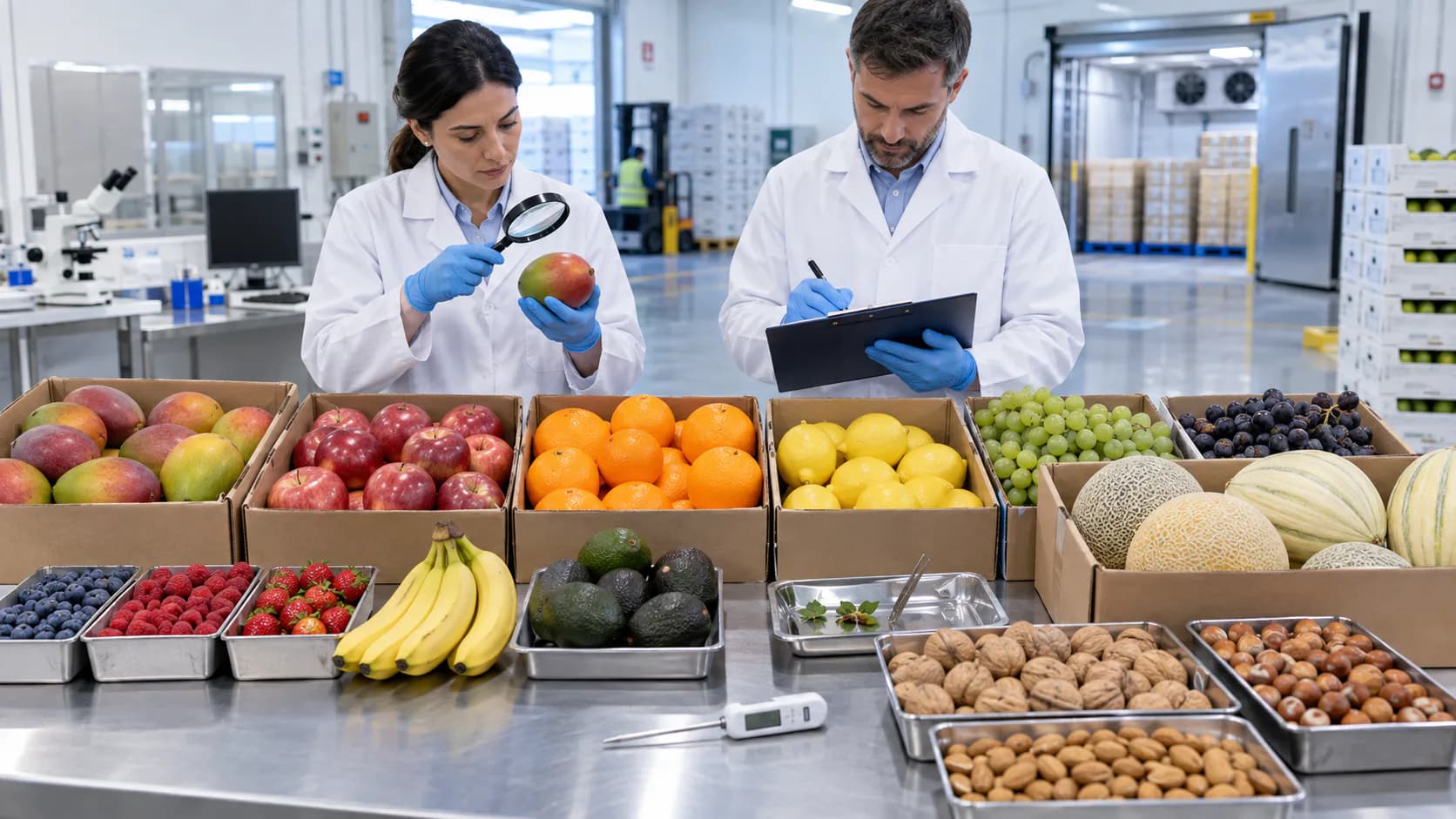
Classification conclusion and import answer
Conditional conclusion: fresh fruit, edible nuts and citrus or melon peel can fall in HTSUS Chapter 08, but Chapter 08 is not one ten-digit line or one duty rate. Species, condition, shell, added ingredients and processing control classification. Commercial fresh-fruit entry is independently conditional on the exact commodity-country pairing in APHIS's Agricultural Commodity Import Requirements database; a tariff number does not prove that a fruit from a particular country or production area is admissible.
| Product | Candidate headings | Decisive facts |
|---|---|---|
| Coconuts, Brazil nuts, cashews; other nuts | 0801-0802 | species, shell, fresh/dried |
| Bananas; dates, figs, pineapples, avocados, mangoes | 0803-0804 | species and condition |
| Citrus; grapes; melons and papayas | 0805-0807 | variety, season and condition |
| Apples, pears; stone fruit; other fresh fruit | 0808-0810 | species and presentation |
| Frozen, provisionally preserved, dried fruit; peel | 0811-0814 | preservation method and additives |
How to determine the code in Chapter 08
Apply GRI 1, the Chapter 8 notes and the legal heading text, followed by GRI 6. Frozen fruit is generally in 0811; fruit only provisionally preserved and unsuitable for immediate consumption in 0812; specified dried fruit and mixtures in 0813; citrus or melon peel in 0814. Cooked, pulped, sweetened or otherwise prepared fruit may move to 2008, while juice belongs in 2009. Botanical fruit such as tomatoes or cucumbers can be legally classified in Chapter 07. A supplier HS code, produce grade or APHIS treatment code does not bind CBP.
Review the technical documents before selecting HTSUS
Lock common and scientific name, cultivar, whole/cut/mixed form, fresh/chilled/frozen/dried condition, temperature, in-shell or shelled state, roasting, sugar, salt, sulfites, oil, seasoning and preservatives, retail packaging and intended use. For fresh produce, identify country and production area, orchard/grower and packinghouse, treatment facility, harvest season, carton marks, wood packaging and route. Match photographs and specifications to invoice, packing list, phytosanitary certificate and treatment record. Small factual changes can alter both the tariff line and APHIS conditions.
Duty, quotas, fees and origin
Column 1 General duty, seasonal rate, tariff-rate quota and any special program depend on the exact ten-digit line, origin, quantity, value and entry date. Check Chapter 99 measures and antidumping/countervailing scope where relevant; free-trade preference requires qualifying origin and proof, not merely shipment from a partner. MPF and HMF may apply. Some produce lines use specific duties, seasonal windows or safeguards, so no representative percentage is stated for all fruit and nuts. State sales or use tax after import is separate from federal customs duty.
APHIS commodity and origin admissibility
Use APHIS ACIR for the exact commodity, country and intended use before purchase. The database may prohibit entry, require a USDA permit, phytosanitary certificate with additional declarations, approved growing area or packinghouse, irradiation/cold/hot-water treatment, pest-free place, port restriction, inspection or safeguarding. A fruit allowed from one country is not thereby allowed from another, and one variety or production region may have separate conditions. The permit and certificate must match the shipment; soil, leaves, pests, broken safeguards or treatment failure can result in refusal, treatment, re-export or destruction.
FDA, FSVP and Prior Notice
FDA separately regulates imported human food under the FD&C Act and FSMA. File Prior Notice before arrival; identify the FSVP importer and meet Foreign Supplier Verification Program duties unless a documented exemption applies. A foreign facility that manufactures, processes, packs or holds food may require FDA registration, while farms and certain packing operations may fall within exemptions that must be analyzed rather than assumed. FDA can examine or sample for pesticides, pathogens, filth, decomposition, undeclared sulfites or other adulteration and may detain without physical examination based on compliance history.
Residues, marking and cold-chain control
Verify EPA pesticide tolerances for the exact pesticide-commodity pair and FDA enforcement, as well as any USDA marketing order, grade, size, maturity or inspection requirements. Country-of-origin marking under 19 U.S.C. 1304 and 19 CFR Part 134 must identify the actual origin; repacking can trigger notice and marking controls. Retail produce can also implicate USDA AMS origin disclosure rules. Keep cold-chain temperature, seal and traceability records, supplier preventive controls, laboratory results and recall contacts. APHIS release does not establish FDA compliance, and FDA admissibility does not waive CBP classification or marking.
Entry file and customs description
Maintain purchase contract, invoice, packing list, bill of lading, customs bond, origin evidence, scientific-name specification, APHIS permit/ACIR printout, phytosanitary certificate, treatment certificate, orchard and packinghouse identifiers, FDA registration information where applicable, Prior Notice confirmation, FSVP records, lab reports, labels and temperature logs. A useful description is “Fresh mangoes (Mangifera indica), cultivar ..., whole and unprocessed, grown in ..., packinghouse ..., treatment ..., ... kg cartons, country of origin ..., HTSUS candidate ...”. “Fresh fruit” alone does not demonstrate reasonable care.
Official U.S. sources
Official sources checked 12 September 2026: USITC HTSUS, APHIS How to Import Plants and Plant Products, APHIS import manuals and ACIR access, FDA Importing Food Products, FDA FSVP and EPA food tolerances. Recheck current HTS revision, ACIR conditions and FDA alerts before shipment.
Limits of this guidance
This page is a framework, not a CBP ruling, APHIS permit or FDA release. A final opinion requires species, cultivar, physical condition, ingredients, photographs, production country and area, grower, packinghouse, treatment, route, quantity, value, origin claim and entry date. An APHIS emergency order or pest finding can change admissibility after contracting. The importer of record, FSVP importer and customs broker retain their respective duties.
Official sources to verify
- WCO — HS Nomenclature 2022 and General Rules for Interpretation
- United States International Trade Commission — Harmonized Tariff Schedule
Editorial note
Prepared by the Global HS Code Checker Editorial Team for customs-classification, tariff and import-policy research. The correct code and applicable measures may change with the merchandise's actual characteristics, jurisdiction, entry date and supporting record. Verify the current tariff, governing measures and competent customs authority before filing an entry. A reviewer is identified only after a named expert has completed the review.