Classification conclusion and import answer
Conditional conclusion: fresh, chilled or frozen meat and edible offal is classified in HTSUS Chapter 02, but Chapter 02 is not one tariff line or one duty rate. Species, cut, bone, offal identity, preservation and processing determine the ten-digit number. Admissibility is a separate question: qualifying FSIS products must come from an eligible country and certified establishment, satisfy APHIS disease restrictions, carry an official foreign inspection certificate and be presented for FSIS import reinspection.
| Product | Candidate headings | Decisive facts |
|---|---|---|
| Beef, fresh/chilled or frozen | 0201; 0202 | Cut and bone status |
| Pork; sheep/goat meat | 0203; 0204 | Species, cut, fresh/frozen |
| Horse meat; edible offal | 0205; 0206 | Species and organ |
| Poultry meat/offal | 0207 | Bird, cut and condition |
| Other meat, fat, salted/dried/smoked | 0208-0210 | Species and preservation |
How to determine the code in Chapter 02
Apply GRI 1, Chapter 2 notes and the legal subheading text, followed by GRI 6. Guts, bladders and stomachs are generally in heading 0504; rendered fat may be in Chapter 15; sausages and prepared or preserved meat move to headings 1601 or 1602. Products unfit for human consumption are not ‘edible offal.’ Seasoning, cooking, canning or formulation can move a product outside Chapter 02. A supplier code, USDA product category or veterinary certificate does not bind CBP.
Review the technical documents before selecting HTSUS
Lock the common and scientific species, cut name, organ, bone/skin/fat content, carcass or portion form, minced status, fresh/chilled/frozen temperature, salting/brining/drying/smoking, seasoning, heat treatment, packaging and intended human use. Match photographs and specifications to invoice, carton label, export certificate and production records. Origin region, slaughter establishment, cutting plant, processing establishment and cold store matter independently of tariff classification.
Duty, fees and origin
Column 1 General duty, tariff-rate quota and any special program depend on the exact ten-digit HTSUS line, quantity, value, origin and entry date. Check Chapter 99 measures, sanctions and AD/CVD scope where relevant; HTS alone does not determine an order's scope. MPF and HMF may apply. Free-trade preference requires qualifying origin and proof. Import duties are federal; downstream state sales/use tax is a different event. Do not quote one representative rate for all beef, pork, poultry and offal.
Eligible countries and foreign establishments
For meat and poultry under FSIS jurisdiction, the exporting country's inspection system must be determined equivalent for the relevant species and process. The foreign establishment must be certified by its competent authority and appear on FSIS's current eligible-establishment list for that product category. Eligibility is product-specific: a country or plant approved for processed poultry is not thereby approved for raw beef or pork. Verify the list on the shipping date and before entry because suspension or delisting can make an otherwise correctly classified shipment inadmissible.
APHIS animal-health admissibility
APHIS Veterinary Services separately controls foreign-animal-disease risks under 9 CFR. Admissibility depends on species, country/region, disease status, processing and routing; foot-and-mouth disease, African swine fever, classical swine fever, highly pathogenic avian influenza and BSE can trigger prohibitions, treatment conditions or a VS permit. Use the APHIS permitting assistant and country conditions before purchase. FSIS equivalence does not waive APHIS restrictions, and an APHIS permit does not establish FSIS eligibility.
FSIS certification and reinspection
Every qualifying shipment must carry the original foreign inspection certificate identifying product, species, establishment, origin, quantity, marks and official attestation. After CBP entry and APHIS clearance, the lot must be presented at an official FSIS import inspection establishment. FSIS conducts document and identity checks and may sample for residues, pathogens, species or condition; failed lots can be refused entry, destroyed, exported or subjected to intensified future inspection. Labels generally require prior compliance and imported product must meet domestic marking and inspection legends.
Food safety, labeling and cold chain
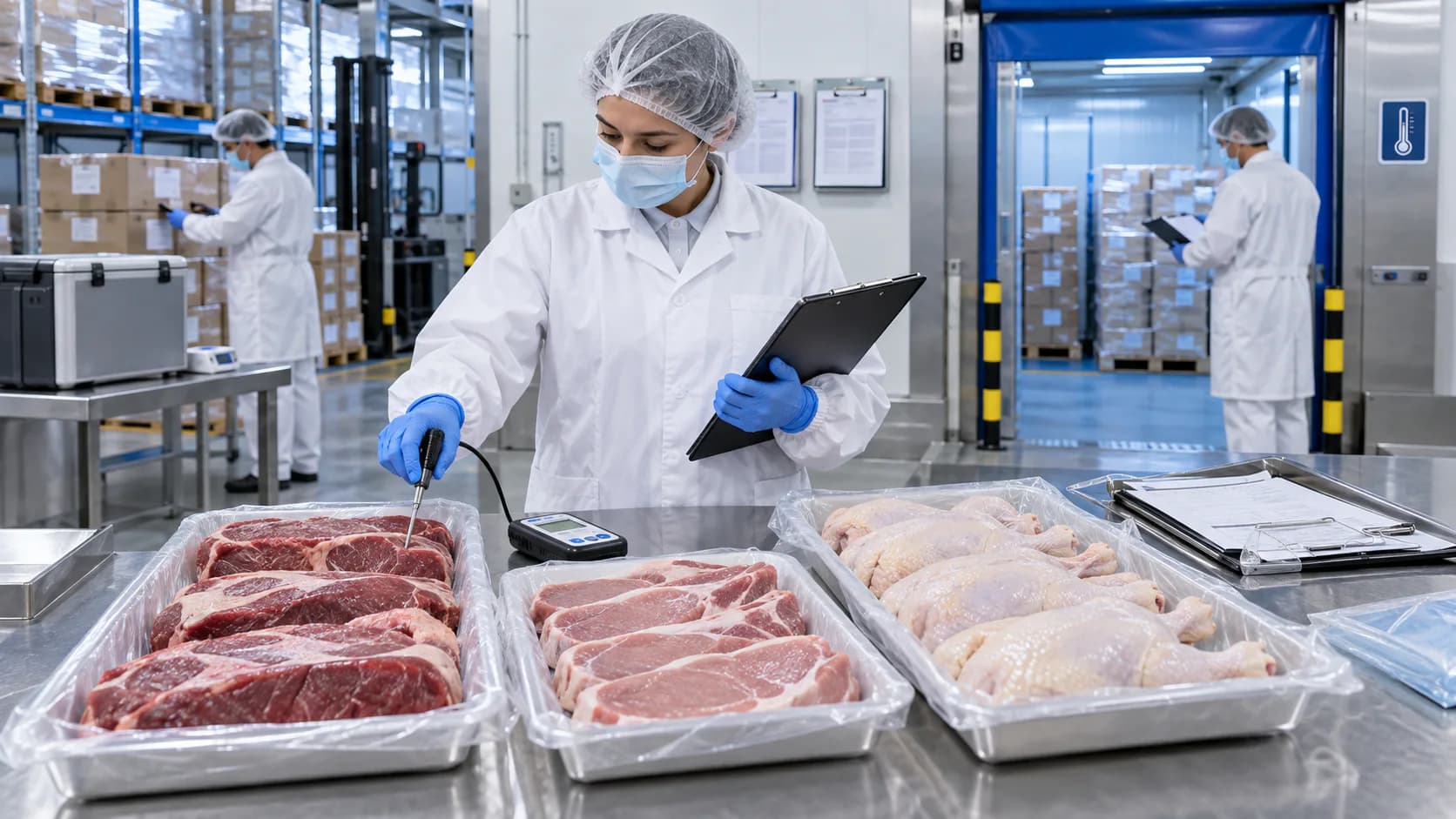
The product must remain wholesome, unadulterated and correctly labeled under the FMIA or PPIA and implementing rules. Validate HACCP, sanitation, residue controls, Salmonella and relevant pathogen programs, allergens or ingredients if added, net weight, safe-handling statements and country-of-origin marking. Keep seal and time-temperature records from loading through the I-house; thawing, broken packaging, temperature abuse or certificate-lot mismatch can cause retention even where the tariff code is correct.
Entry file and customs description
Maintain commercial invoice, packing list, bill of lading, customs bond, entry data, origin support, species/cut specification, labels, foreign inspection certificate, APHIS permit or government certification, FSIS application/reinspection records, establishment eligibility evidence and temperature/seal logs. A useful description is “Frozen boneless bovine short ribs, Bos taurus, unseasoned and uncooked, for human consumption, ... kg cartons, foreign establishment ..., HTSUS candidate ..., origin ...”. ‘Frozen meat’ or ‘offal’ alone does not support reasonable care.
Official U.S. sources
Official sources checked 12 September 2026: USITC HTSUS, FSIS Import Guidance, FSIS eligible foreign establishments, FSIS import procedures and APHIS Animal Product Imports. Recheck the current HTS revision, country page, plant listing, certificate and disease status before shipment.
Limits of this guidance
This page is a framework, not a CBP ruling, FSIS equivalence decision or APHIS admissibility permit. A final opinion requires species, cut/organ, bone and fat, processing, temperature, photographs, country and region, slaughter/cutting plant, certificate model, quantity, value, route, origin and entry date. A change in disease status or establishment eligibility can bar entry after contracting. The importer of record remains responsible for reasonable care and truthful PGA data.
Official sources to verify
- WCO — HS Nomenclature 2022 and General Rules for Interpretation
- United States International Trade Commission — Harmonized Tariff Schedule
Editorial note
Prepared by the Global HS Code Checker Editorial Team for customs-classification, tariff and import-policy research. The correct code and applicable measures may change with the merchandise's actual characteristics, jurisdiction, entry date and supporting record. Verify the current tariff, governing measures and competent customs authority before filing an entry. A reviewer is identified only after a named expert has completed the review.