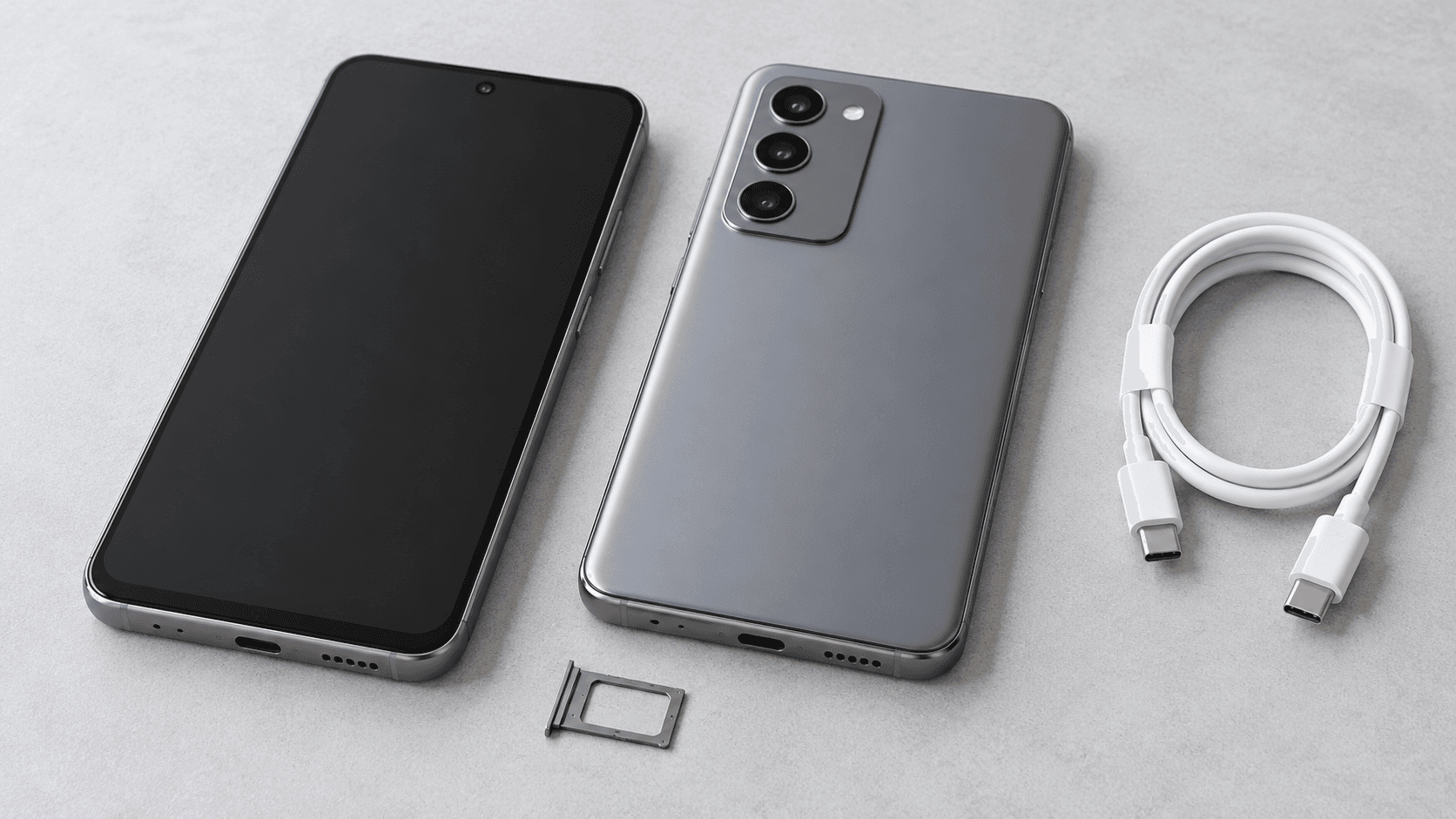
Start with the imported product
A new, complete smartphone points to HS 8517.13, subject to its actual functionality. Confirm the current CN and TARIC subdivision before customs declaration. Do not transfer a Vietnamese national code to an EU entry, and do not extend the smartphone conclusion to separately imported batteries, chargers or communications modules.
The decisive purchase information is the full hardware model and regional variant, not the consumer-facing series name. This draft does not establish a current TARIC rate or an absence of origin-dependent measures.
The model must be fit for EU placement
The European Commission's smartphone guidance describes ecodesign and energy-labelling requirements from 20 June 2025, under Regulations (EU) 2023/1670 and 2023/1669. Check scope and exceptions for the specific device, its energy label, EPREL entry and repairability information. A customs classification is not evidence of meeting these obligations.
Build a separate radio-compliance dossier: exact model identification, manufacturer declaration, applicable tests, product markings and the responsible EU economic operator. Do not accept a photograph of a CE symbol as the entire dossier. The full RED provision and amendment review remains a publication prerequisite in this revision.
Use a model-to-document matrix
Compare model and hardware revision against radio bands, firmware configuration, battery/charger, declaration references, test coverage and energy-label database identity. If the shipment contains another variant, stop relying on the first variant's evidence until the coverage is established.
Determine the importer and first-placement Member State. National language, producer-responsibility and fiscal requirements need a country-specific review; EU membership does not create one identical operating checklist for all six markets. Origin and customs value are also required before calculating charges. Use the EU HS lookup to start the classification record, not to substitute for product approval.