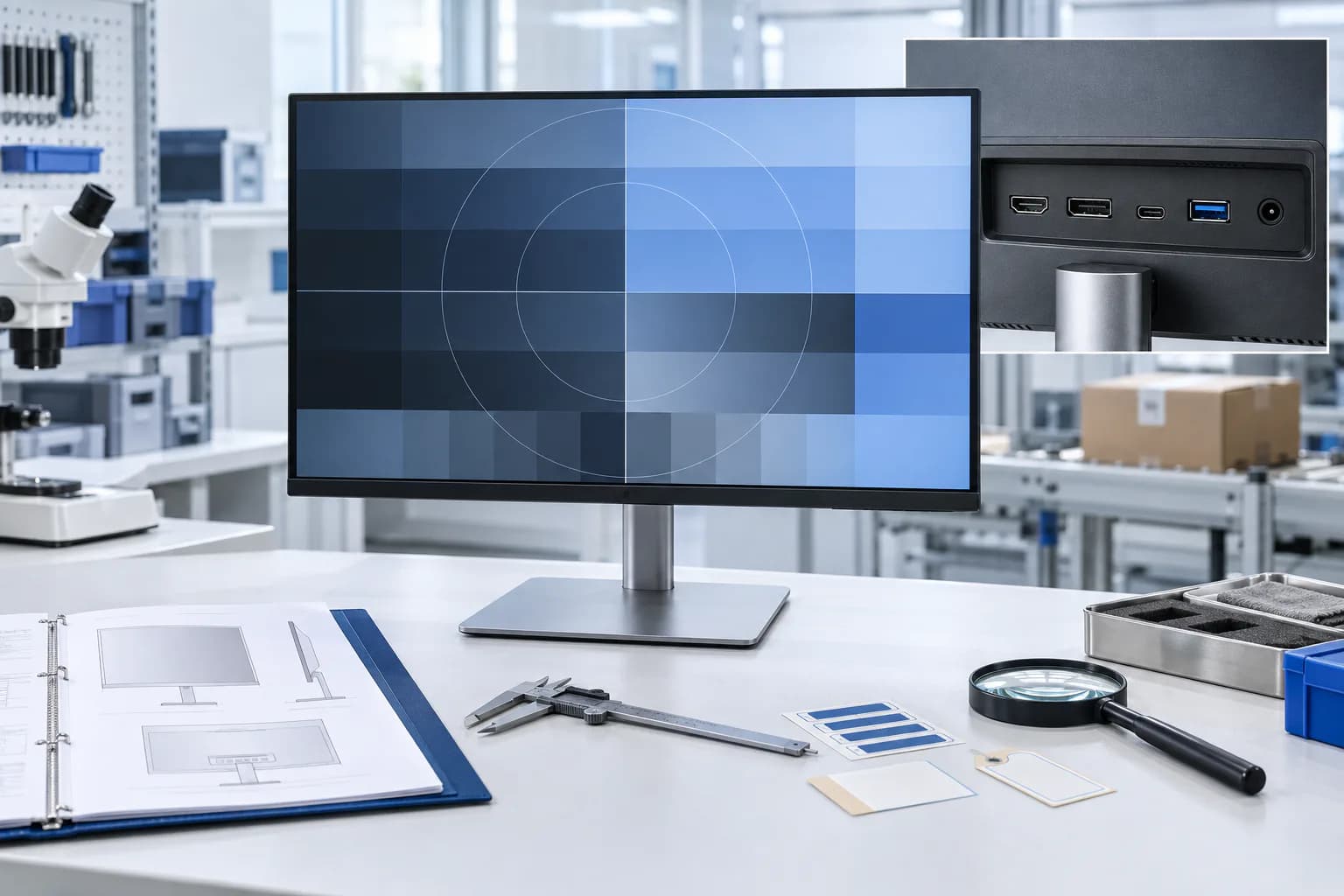
EU classification and market-access conclusion
Conditional conclusion: a complete tuner-free LCD desktop monitor solely or principally used in an ADP system of heading 8471 is a candidate for CN 8528 52 10, normally with a Free third-country customs duty. A directly connectable LCD monitor with broader objective use may fall in CN 8528 52 91, for which TARIC must be checked because the conventional rate can differ materially. Flat-panel modules, televisions, vehicle displays, medical displays and digital signage require separate analysis. New monitors are not generally prohibited, but market placement requires the applicable CE, environmental, energy and producer-responsibility compliance.
CN 8528 52 10 versus 8528 52 91
The division is not determined by the presence of HDMI alone. Consider pixel pitch, native resolution, aspect ratio, refresh rate, near-viewing ergonomics, connectors, signal formats, stand, controls and how the apparatus is objectively designed. The Court of Justice in C-288/18 confirmed that suitability for close viewing is relevant but not the only criterion. Commission Implementing Regulation 2023/2656 classified a multifunctional LCD apparatus in 8528 52 91 because it could connect to an ADP machine but was not solely or principally used in an ADP system. Speakers, webcam, USB hub and KVM do not automatically change principal use.
Display modules and other monitors
Heading 8524 covers incomplete flat-panel display modules; backlight, touch layer and pixel-addressing electronics may remain compatible with module status. A complete housing, signal-processing board, user controls and external video inputs point toward 8528. Other monitors failing the ADP connection/design condition fall under 8528 59, while televisions with a tuner fall under 8528 71 to 8528 73. Record the imported condition and apply GIR 1 and 6, plus Section XVI notes where multifunctionality is material.
Customs duty and import VAT
Check the exact ten-digit TARIC code, origin and import date. 8528 52 10 is generally Free, while 8528 52 91 has a 14% conventional third-country duty in the tariff reference checked for this guide; live TARIC measures, suspensions, anti-dumping, countervailing and sanctions must still be searched at entry. Import VAT is assessed under the Member State of import/destination and may be recoverable by a taxable importer subject to national rules. Customs value includes specified additions and related-party issues. Preferential origin needs both a qualifying rule and valid proof; shipment from an FTA partner does not establish origin.
CE marking: EMC, LVD and RED
The importer must identify the applicable Union harmonisation legislation and complete conformity assessment before placing the model on the market. Typical wired monitors engage EMC Directive 2014/30/EU and, depending on voltage architecture, Low Voltage Directive 2014/35/EU; Wi-Fi/Bluetooth models engage Radio Equipment Directive 2014/53/EU. Prepare EU Declaration of Conformity, technical documentation, risk assessment, test reports, traceability, importer details and CE marking for the exact variants. A compliant radio module does not automatically prove the finished host.
RoHS, WEEE, ecodesign and energy label
Directive 2011/65/EU (RoHS) restricts hazardous substances; Directive 2012/19/EU (WEEE) requires producer registration, marking and financing in each relevant Member State. Electronic displays, including computer monitors, are subject to Ecodesign Regulation (EU) 2019/2021 and Energy Labelling Regulation (EU) 2019/2013 unless a defined exclusion applies. Register the model in EPREL before placing it on the market, provide the label/product information and meet repairability, firmware and spare-part duties. Packaging and national EPR registrations remain separate.
Technical file and customs description
Maintain invoice, transport and origin documents, BOM, block diagram, photos, port list, tuner declaration, customs analysis, DoC, test reports, risk assessment, RoHS evidence, EPREL record, energy label, WEEE/packaging registrations, instructions and label artwork. Suggested description: “Colour LCD desktop computer monitor, ... cm diagonal, ... resolution, HDMI/DisplayPort/USB-C inputs, without television tuner, model ..., origin ..., CN candidate 8528 52 10.” Separate variants where panel, radio, power supply or intended principal use differs.
Classification and compliance risk
High-risk errors include treating an LCD module as a monitor, using 8528 52 10 for signage or vehicle apparatus, omitting 8528 52 91 duty, and placing a radio-enabled model on the market using only a module test. Obtain Binding Tariff Information where the principal-use boundary affects duty. Customs classification and CE conformity are independent: a correct CN code does not validate the product, and a CE mark does not decide tariff classification. Contracts should allocate recall, corrective action, reclassification and EPR liabilities.
Official EU sources
Official sources checked 12 September 2026: EU TARIC, Regulation 2023/2656, Ecodesign Regulation 2019/2021, Energy Labelling Regulation 2019/2013, EMC Directive and RoHS Directive. Recheck TARIC measures and harmonised standards before import.
Limits and pre-import checklist
This guidance is conditional and is not BTI, market-surveillance approval or a conformity certificate. Final review needs model, screen technology and size, resolution, all signal inputs, tuner status, OS/processor/storage, radios, camera, speakers, power system, intended users, import state, origin, route and Member State. Obtain the exact model file and complete conformity obligations before dispatch.