Quick answer
Classify an automated optical inspection machine and its host computer, then review U.S. duty, origin, FCC and entry documentation.
U.S. classification answer
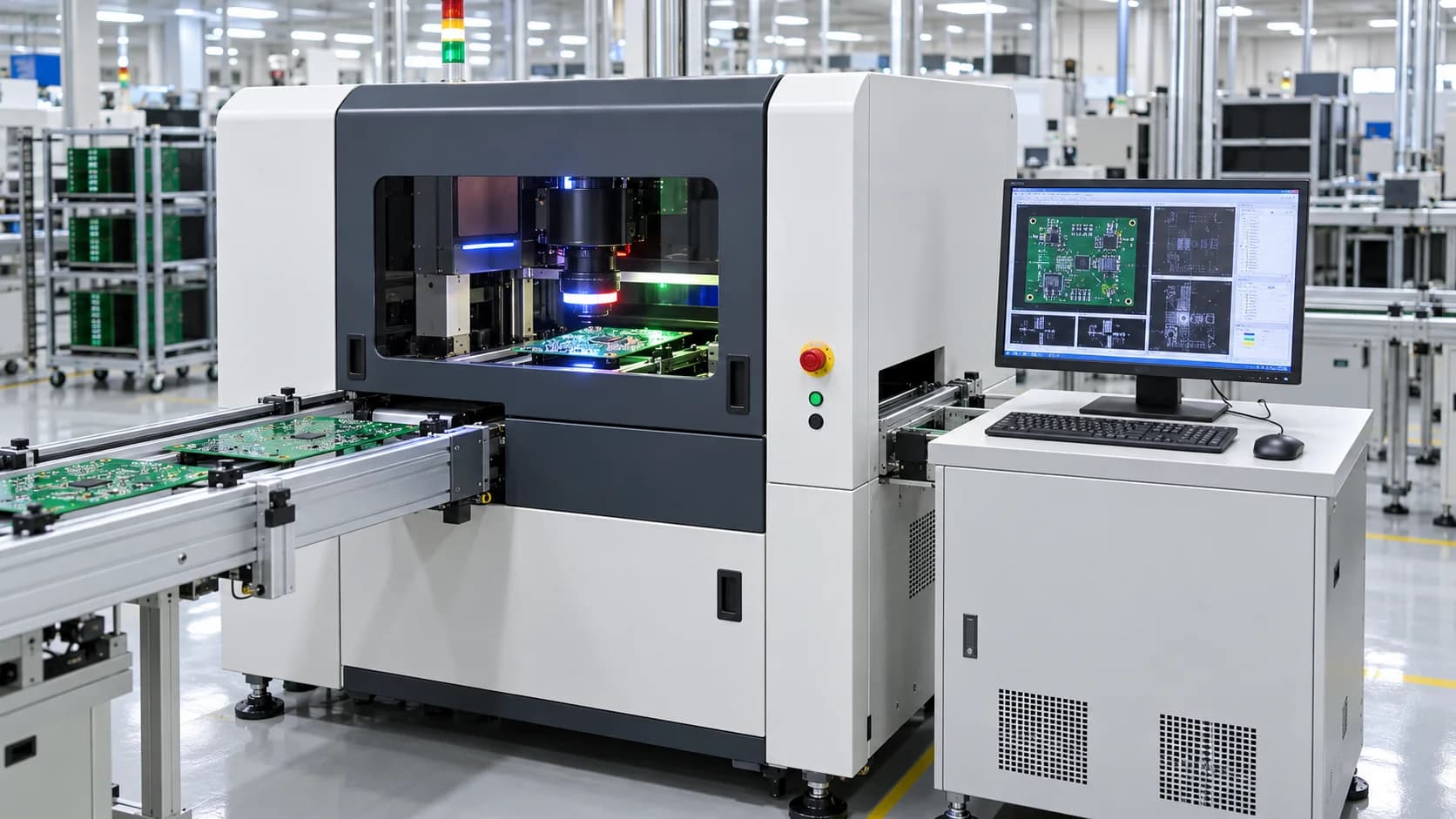
The TR7700L SIII is an automated optical inspection machine for populated PCB/PCBA assemblies and is best supported in HTSUS 9031.49.9000, other optical measuring or checking instruments. It uses cameras and controlled illumination to detect component and solder defects; it does not physically repair the board. The U.S. schedule does not reproduce Vietnam's dedicated 9031.49.30 breakout, so the current ten-digit U.S. line must be checked in the HTS on the entry date. Heading 9031.41 is not appropriate when the inspected article is an assembled board rather than a semiconductor wafer, device, mask or reticle.
Technical identity and competing provisions
The file should identify the 4-megapixel color camera, multiphase RGB/white lighting, 10 or 15 μm optical resolution, XY servo motion and inline conveyor. The system checks missing, shifted, reversed or damaged components and solder bridges, insufficient/excess solder, lifted leads and surface contamination. Those objective characteristics establish an optical checking function under GRI 1 and 6. A repair station, offline editor, barcode reader or yield-management option does not change the AOI machine's essential checking function unless the imported configuration actually performs another principal function.
Host computer: with the AOI or separately
Treat the HP host computer with the AOI only when the evidence shows a dedicated, mandatory controller presented with the machine, loaded with proprietary AOI software, directly connected to camera, motion and conveyor controls, supplied one-for-one and not commercially usable on its own. A general-purpose tower, monitor, keyboard and mouse that can be sold or used independently should be entered separately under the applicable 8471 and 8528 provisions. CBP applies legal notes for functional units and separately presented ADP machines; a common purchase order or invoice alone does not establish one tariff article.
Duty, origin and entry charges
The 2026 Column 1 General rate for 9031.49.9000 is Free, subject to live verification; Column 2, Chapter 99, sanctions and trade remedies must be checked separately. Taiwan origin does not by itself trigger the China Section 301 measures. Retain evidence of actual origin, substantial transformation and 19 U.S.C. 1304 marking. Formal entries may incur MPF and ocean shipments may incur HMF. Software licences, assists or royalties can affect customs value when the statutory conditions are met, even where the base duty is free.
Import compliance and equipment evidence
No product-specific federal import licence was identified solely because the equipment is an industrial AOI machine. CBP classification, valuation and marking still apply, together with UFLPA and 19 U.S.C. 1307 supply-chain screening. The host PC and digital electronics should retain FCC Part 15 Class A supplier conformity/test evidence; any intentional radio module requires its own equipment-authorization review. Workplace or customer specifications may require NRTL-listed electrical components even when that is not a CBP entry licence. Imported used equipment would require a separate safety, condition and valuation review.
Documents and proposed entry description
Keep the purchase contract, invoice, packing list, bill of lading, product brochure, inspection-flow diagram, model/serial and manufacturing-date photographs, software licence, one-to-one computer connection diagram, country-of-origin evidence and FCC records. Proposed description: “Automated optical inspection machine using cameras and controlled lighting to inspect component and solder defects on PCB/PCBA assemblies, TRI TR7700L SIII, with [dedicated controller/separately classified computer], new, origin Taiwan.” A prospective CBP ruling is prudent for recurring high-value imports or when the computer treatment is material.
Model phase-out and official sources
TRI states that the model's product phase ended on September 30, 2025, with service and spare-parts support planned through September 30, 2028. A 2026 claim that the unit is new should therefore be supported by manufacture date, unused-stock confirmation, serial history and warranty status. Official sources checked September 21, 2026: USITC HTS, CBP CROSS, CBP H126020, TRI TR7700L SIII product information and TRI product phase-out notice. This guidance is conditional and is not a CBP ruling.
Official sources to verify
- WCO — HS Nomenclature 2022 and General Rules for Interpretation
- United States International Trade Commission — Harmonized Tariff Schedule
Editorial note
Prepared by the Global HS Code Checker Editorial Team for customs-classification, tariff and import-policy research. The correct code and applicable measures may change with the merchandise's actual characteristics, jurisdiction, entry date and supporting record. Verify the current tariff, governing measures and competent customs authority before filing an entry. A reviewer is identified only after a named expert has completed the review.