Quick answer
U.S. classification of new rectifier, Zener and Schottky diodes; duty-free base rate, China Section 301, marking, origin and import records.
Classification and duty conclusion
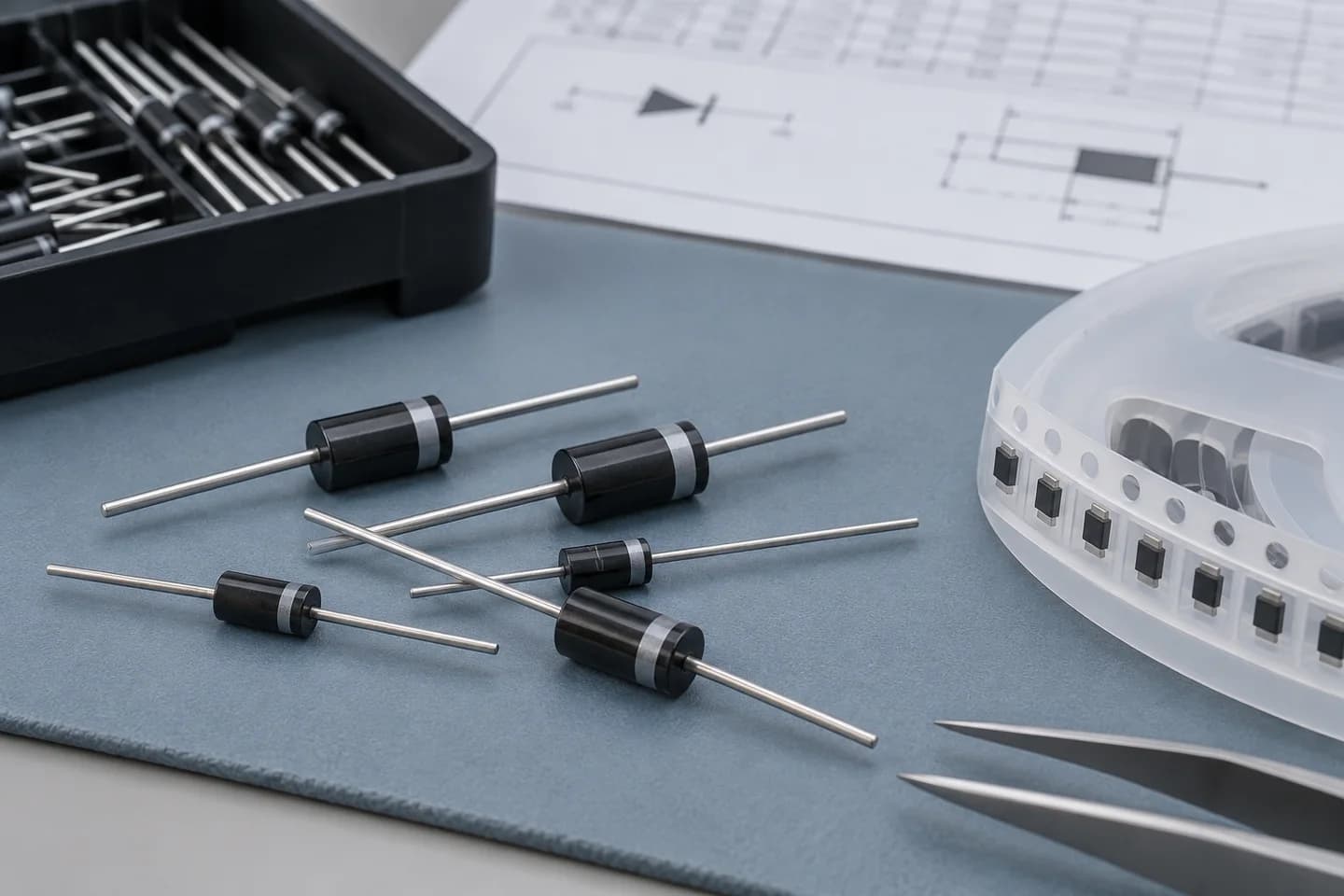
A brand-new discrete rectifier, Zener, Schottky or microwave semiconductor diode, other than a photosensitive diode or LED, falls in HTSUS 8541.10.00. The 2026 Column 1 general rate is Free and Column 2 is 35%. This conclusion assumes the imported article is a diode itself, not an integrated circuit, LED, photodiode, populated board, rectifier assembly or finished apparatus.
Selecting the statistical suffix
The ten-digit number depends on the form and electrical characteristics: 8541.10.0040 covers unmounted chips, dice and wafers; 8541.10.0050 Zener diodes; 8541.10.0060 microwave diodes; 8541.10.0070 other diodes with a maximum current of 0.5 A or less; and 8541.10.0080 other diodes above that branch. The invoice and entry file should state semiconductor material, function, maximum current, reverse voltage, package, part number and whether the die is mounted.
China-origin additional duties
For China-origin merchandise, “Free” is not the landed-duty answer. HTS 8541.10.00 is within the semiconductor lines subject to the existing 50% Section 301 technology-transfer duty effective in 2025. The separate semiconductor-dominance action effective December 23, 2025 starts at 0% until June 23, 2027, and the July 24, 2026 forced-labor Section 301 action does not add 12.5% to this line because 8541.10.00 is listed in U.S. note 52(b) and entered through the exception heading 9903.05.86. The broker must still test the current Chapter 99 notes, exclusions, origin and entry date.
Origin, marking and admissibility
Mark the actual country of origin under 19 U.S.C. §1304 and 19 CFR Part 134 unless a statutory exception applies. Semiconductor origin can turn on substantial transformation rather than the shipping country; wafer fabrication, diffusion, assembly, packaging and testing must be documented. UFLPA remains an admissibility rule independent of tariff exceptions, so map polysilicon and other high-risk inputs when relevant and retain supplier, fab, assembly/test and transaction records.
Product compliance boundary
A bare diode does not require FCC equipment authorization merely because it is an electronic component, and it does not receive a standalone CE-style approval in the United States. Requirements change when the diode is imported in a consumer product, radio, medical device, automotive safety system or other regulated apparatus. Purchaser specifications commonly require RoHS/REACH declarations, AEC-Q qualification, JEDEC packaging, moisture sensitivity or conflict-minerals information; those commercial controls should not be described as general CBP entry permits.
Import record checklist
Keep the purchase order, invoice, packing list, transport record, part-specific datasheet, package drawing, marking photographs, material declaration, current and voltage ratings, manufacturing flow, fab/assembly/test sites, origin analysis and Chapter 99 worksheet. A useful description is: “Discrete silicon Schottky diode, non-photosensitive, non-LED, maximum current ... A, reverse voltage ... V, package ..., part number ..., new.” Avoid “electronic parts” or “semiconductor” without the facts that select the statistical suffix.
When classification changes
LEDs fall in 8541.41; photovoltaic cells in 8541.42 or 8541.43; other photosensitive devices in 8541.49; transistors in 8541.21/29; thyristors, DIACs and TRIACs in 8541.30; integrated circuits in 8542. A bridge rectifier, power module, device with control circuitry, populated PCB or complete apparatus must be classified from its imported condition and may leave 8541.10.
Official sources
Sources checked September 22, 2026: USITC 2026 HTS; USTR four-year review and 50% semiconductor tariff; USTR semiconductor final action; CBP CROSS; CBP UFLPA.
Editorial note
Prepared by the Global HS Code Checker Editorial Team for customs-classification, tariff and import-policy research. The correct code and applicable measures may change with the merchandise's actual characteristics, jurisdiction, entry date and supporting record. Verify the current tariff, governing measures and competent customs authority before filing an entry. A reviewer is identified only after a named expert has completed the review.