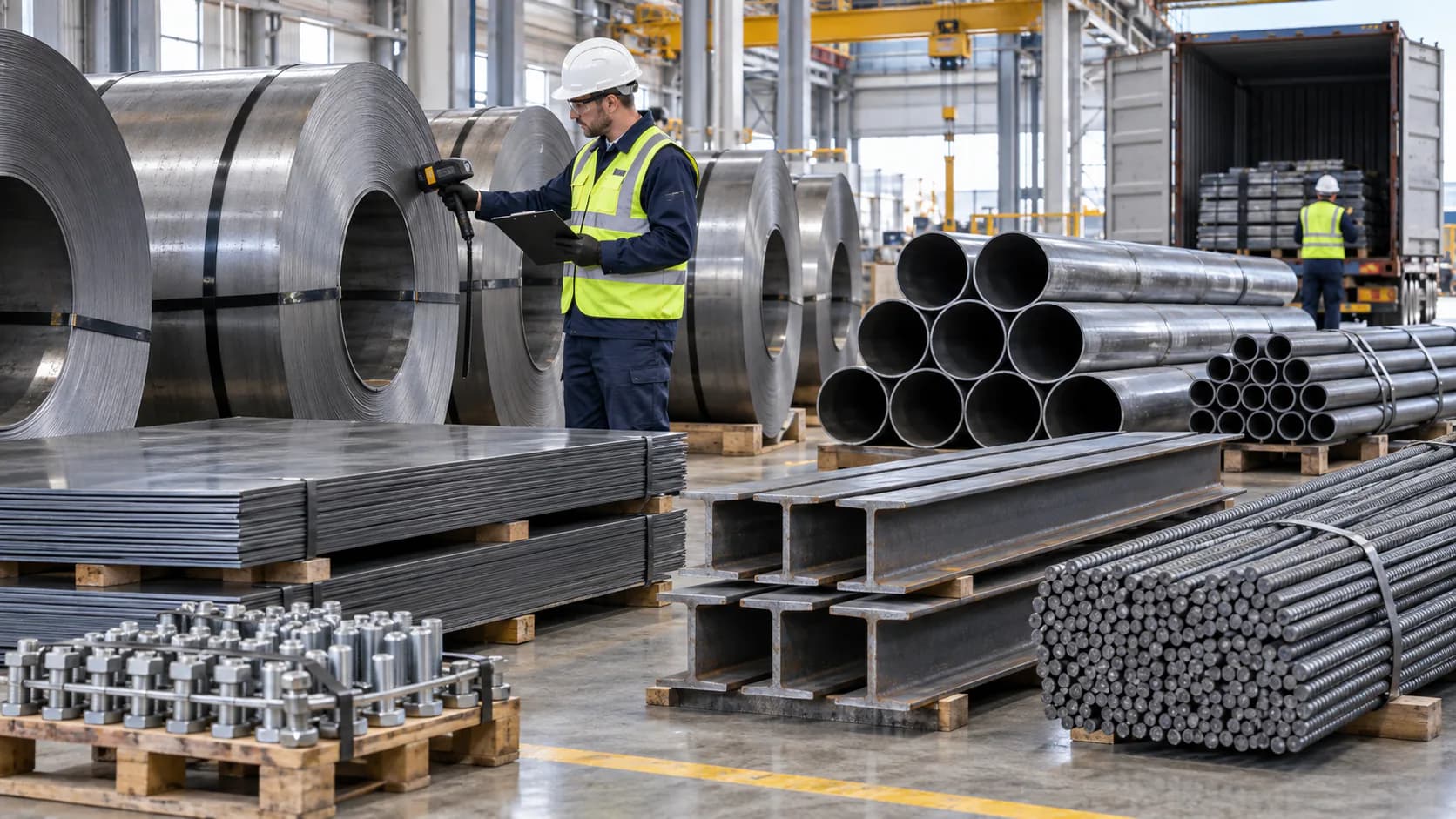
Classification conclusion and import answer
Conditional conclusion: iron and steel is not a single HTSUS commodity. Primary materials and basic forms generally fall in Chapter 72, while pipes, structures, containers, fasteners and other articles generally fall in Chapter 73. The ten-digit number depends on chemistry, physical form, dimensions, manufacturing process, coating and degree of completion. U.S. admissibility and landed duty require separate checks for the base tariff line, Chapter 99 measures, Section 232 steel content, antidumping/countervailing duty scope, licensing, origin and any agency rule tied to the finished use.
| Product form | Candidate headings | Decisive facts |
|---|---|---|
| Pig iron, ferroalloys, DRI, scrap | 7201-7204 | Chemistry, condition, recovery use |
| Semifinished and flat-rolled steel | 7205-7212 | Width, hot/cold rolling, coating |
| Bars, rods, sections and wire | 7213-7217 | Coil, cross-section, working |
| Stainless and other alloy steel | 7218-7229 | Alloy chemistry and form |
| Tubes, structures, fasteners, other articles | 7301-7326 | Construction, function, completion |
Deciding between Chapters 72 and 73
Apply GRI 1, Section XV and Chapters 72-73 notes, then GRI 6. Chapter 72 separates ironmaking materials, semifinished products, flat-rolled products, bars, wire, stainless steel and other alloy steel. Chapter 73 includes sheet piling, railway material, cast and steel pipes, tube fittings, structures, tanks, wire rope, chain, nails, fasteners, springs and residual articles. A completed machine part may be classified with the machine rather than as an article of steel. Marketing phrases such as structural steel, tubing or fabricated metal do not replace the legal text.
Review the technical documents before selecting HTSUS
Obtain a mill test certificate, heat analysis, grade standard, carbon and alloy percentages, stainless status, actual width/thickness/diameter, solid or hollow cross-section, coil/sheet/bar form, hot or cold rolling, drawing, forging or casting, seamless or welded construction, coating/plating, machining and intended use. Pipes require outside diameter, wall thickness, weld type and pressure use; structures require drawings showing whether they are prepared for assembly. Match the specification to photographs, invoice, packing list, heat and coil numbers. Foreign tariff codes and customer part numbers do not bind CBP.
Base duty, Chapter 99 and entry charges
Column 1 General, special-program and Column 2 rates come from the exact ten-digit HTSUS and entry date. Then apply every relevant Chapter 99 number, Section 232 assessment, AD/CVD cash deposit, merchandise processing fee and harbor maintenance fee. Preference requires qualifying origin and proof; shipment from an FTA country is insufficient. State sales/use tax is not a federal import duty. A base line showing Free does not establish a zero landed duty because trade-remedy liabilities may be substantially larger and may be adjusted after entry.
Section 232 steel measures
Steel articles within the operative proclamations are generally subject to the Section 232 additional tariff, currently 50 percent for covered imports from most countries from June 4, 2025, with the applicable treatment and exceptions checked in the current HTSUS Chapter 99 notes. Derivative articles may require reporting the value and quantity of steel content. The importer must verify the covered tariff line, country treatment, exclusion status and effective date; a product made partly of steel is not automatically covered, while a covered steel derivative cannot be cleared using only its ordinary HTSUS line.
AD/CVD scope and cash deposits
AD/CVD orders are governed by their written scope, not by HTS references alone. Compare grade, dimensions, coating, processing, end use, origin and producer/exporter with every potentially relevant steel order and scope ruling. Deposit rates may be company-specific and liquidation can occur years later at a different rate. Transshipment, minor processing, third-country finishing and false origin create evasion exposure under EAPA and other laws. Obtain producer identity and scope evidence before purchase; do not wait for the entry summary to ask whether flat-rolled steel, pipe, rebar or fasteners are covered.
Steel import licensing and product controls
Steel mill products covered by the Steel Import Monitoring and Analysis system require an automatic import license for each customs entry; the license is obtained before filing the CBP entry summary and includes product, value, quantity and country-of-melt-and-pour data. The tariff line determines whether SIMA applies. Finished articles may also trigger EPA, DOT, CPSC, FDA or other federal requirements because of use, but there is no single product-agency permit for all Chapters 72 and 73. Steel used in federally funded projects may face separate domestic-content rules downstream.
Origin, melt and pour, and marking
Determine substantial-transformation origin separately from shipping country and preserve evidence of the steelmaking chain. Report country of melt and pour where required by SIMA and Section 232 rules, and do not substitute the finishing country without legal analysis. Goods and containers must comply with 19 U.S.C. §1304 and 19 CFR Part 134 marking rules unless an exception applies. Mill certificate, heat number, producer, coil number, purchase trail and processing records should reconcile. Origin decisions can differ between ordinary marking, preferential origin, Section 232 and AD/CVD proceedings.
Entry file and customs description
Keep the purchase contract, commercial invoice, packing list, bill of lading, entry bond, valuation support, origin proof, mill test certificate, chemical analysis, drawings, dimensions, coating record, producer/exporter identity, SIMA license and Section 232/AD-CVD scope memorandum. A useful description is: “Nonalloy hot-rolled steel, flat-rolled in coils, not clad/plated/coated, width ... mm, thickness ... mm, grade ..., carbon ...%, ASTM ..., heat/coil ..., country of melt and pour ..., intended use ..., new merchandise.” Change the attributes for pipe, structures or fasteners; “steel products” is not a defensible declaration.
Official U.S. sources
Official sources checked September 12, 2026: USITC 2026 HTS search, CBP tariff factsheet, including Section 232 steel, SIMA licensing, SIMA frequently asked questions, and Commerce AD/CVD scope guidance. Recheck the live HTS, Chapter 99, Federal Register orders and producer rates on the entry date.
Limits of this guidance
This is a conditional framework, not a CBP ruling, Commerce scope ruling or calculation for an unidentified shipment. Final advice requires the sample, MTC, chemistry, dimensions, process, coating, completion, use, producer, exporter, melt-and-pour country, origin, value and entry date. Small changes in chromium, carbon, width, thickness, welding or fabrication can change the tariff line and trade-remedy scope. For recurring or high-value entries, consider a CBP binding ruling and a Commerce scope ruling where legally appropriate. A supplier's prior entry does not protect the importer of record.
Official sources to verify
- WCO — HS Nomenclature 2022 and General Rules for Interpretation
- United States International Trade Commission — Harmonized Tariff Schedule
Editorial note
Prepared by the Global HS Code Checker Editorial Team for customs-classification, tariff and import-policy research. The correct code and applicable measures may change with the merchandise's actual characteristics, jurisdiction, entry date and supporting record. Verify the current tariff, governing measures and competent customs authority before filing an entry. A reviewer is identified only after a named expert has completed the review.