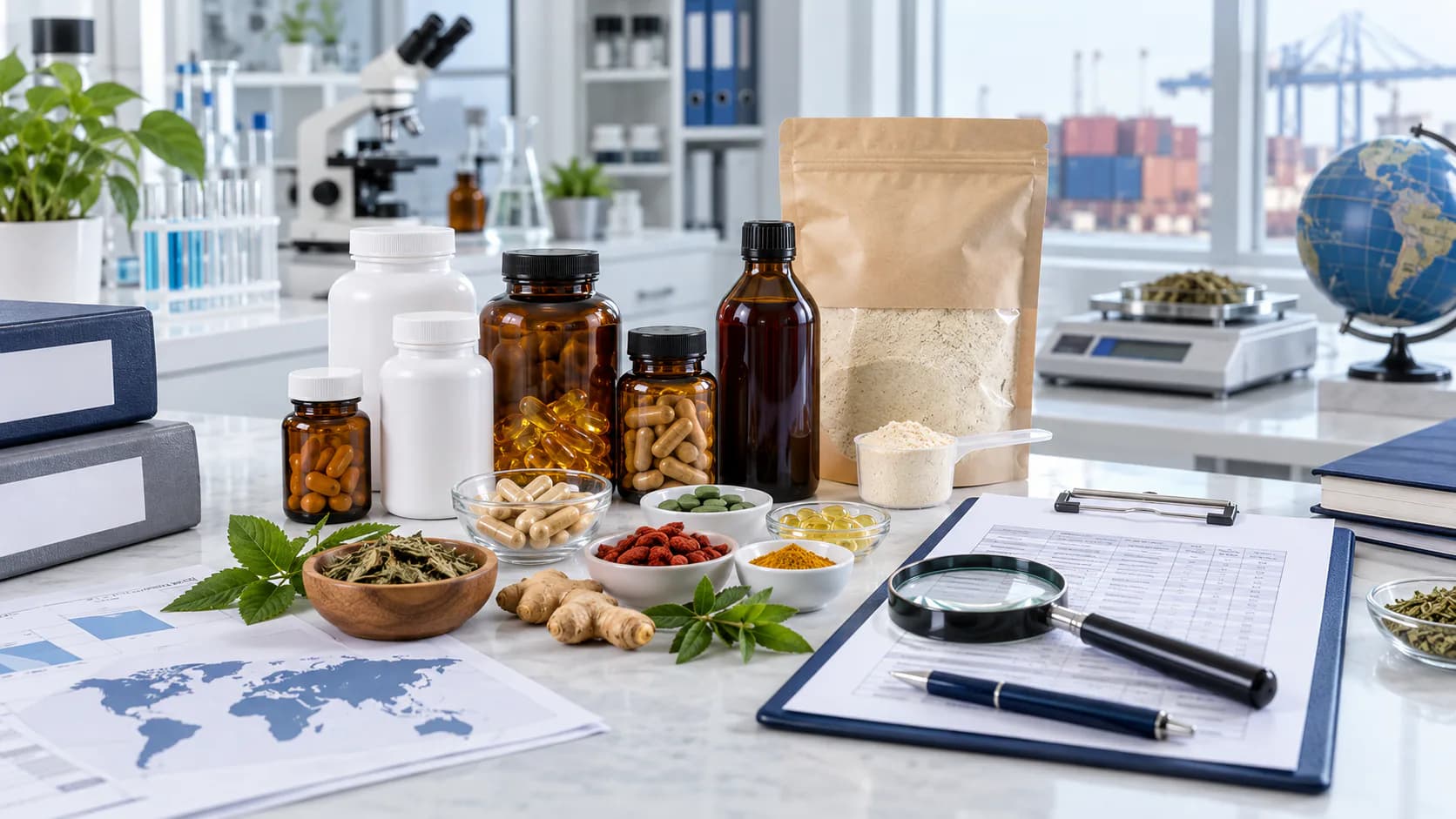
Classification conclusion and import answer
Conditional conclusion: a measured-dose tablet, capsule, powder or liquid marketed only to supplement the diet is often classified in HTSUS 2106.90.9998, food preparations not elsewhere specified or included, with a Column 1 General rate commonly 6.4% ad valorem. That number is not universal. Protein concentrates may fall in 2106.10; beverages ready for consumption in 2202; isolated vitamins in Chapter 29; and products presented for therapeutic or prophylactic use may require Chapter 30 analysis. FDA admissibility is separate from customs classification. Commercial imports require a compliant foreign food facility registration, Prior Notice, an accountable U.S. FSVP importer, lawful ingredients, dietary-supplement cGMP, and a compliant Supplement Facts label.
| Product form | Candidate HTSUS | Decisive fact |
|---|---|---|
| Mixed capsules/tablets | 2106.90.9998 | Food supplement, not elsewhere specified |
| Protein concentrate | 2106.10 | Protein content and preparation |
| Ready-to-drink supplement | 2202 | Imported ready for consumption |
| Single vitamin substance | Chapter 29 | Chemical identity and purity |
| Therapeutic measured dose | Chapter 30 candidate | Objective medicinal presentation and use |
How to select the HTSUS heading
Apply GRI 1 to the heading text and legal notes, then GRI 6 to the U.S. statistical suffix. Lock the complete quantitative formula, sugar and dairy content, physical form, dosage, intended use, label, claims and retail packaging. CBP rulings such as N275292 classify mixed supplement powders in 2106.90.9998, but rulings bind only the identified merchandise. Botanical extracts may remain in 1302 when they retain the identity of an extract; mixed retail preparations may move to 2106. A liquid is not automatically a beverage: concentration, measured-dose use and whether it is consumed as imported matter. Kits require GRI 3 analysis.
Customs duty, origin and Chapter 99
For the common residual line 2106.90.9998, the general rate is typically 6.4%; the current HTSUS must be checked on the entry date because sugar, dairy and composition-based breakouts can carry different rates or additional agricultural duties. Column 2 and special-program rates are separate. Country of origin controls preference, marking and possible Chapter 99 measures. Chinese-origin merchandise may require an additional Section 301 line depending on the precise ten-digit HTSUS and current exclusions; never infer the additional rate from the six-digit heading. MPF applies and HMF can apply to ocean entries. Screen AD/CVD, sanctions and UFLPA by ingredient, manufacturer and supply chain.
FDA import entry requirements
Dietary supplements are foods under the FD&C Act as amended by DSHEA. FDA generally does not approve each conventional supplement before import, but may examine, sample, detain or refuse a shipment. Submit Prior Notice for each shipment and accurate entry/product-code data. The foreign facility that manufactures, processes, packs or holds the food must be registered unless an exemption applies, with a U.S. agent and timely renewal. The importer of record, FSVP importer and label distributor can be different entities; each role must be identified before shipment.
FSVP and foreign facility registration
The U.S. Foreign Supplier Verification Programs rule generally requires a U.S.-based FSVP importer to conduct hazard analysis, evaluate and approve the foreign supplier, establish verification activities, take corrective action and maintain records. Dietary-supplement-specific modified provisions may apply depending on who complies with 21 CFR Part 111. A customs broker does not become the substantive FSVP importer merely by transmitting data. FDA facility registration, Prior Notice and FSVP are separate obligations, and a registration number is not FDA approval or a certificate of product legality.
New dietary ingredients and ingredient legality
A dietary ingredient not marketed in the United States before 15 October 1994 may be a new dietary ingredient. Unless an exemption applies, the manufacturer or distributor must submit an NDI notification with safety support at least 75 days before interstate marketing. Confirm identity, history of use, manufacturing process, specifications and conditions of use; an ingredient name on a foreign positive list is not enough. Also assess food additives, color additives and substances excluded from the dietary-supplement definition. FDA Import Alert 54-18 identifies NDI-related detention risk.
cGMP, safety and adverse events
Manufacturing must comply with dietary supplement cGMP in 21 CFR Part 111, including specifications, identity testing, quality control, master manufacturing records, batch records, reserve samples and complaint handling. The responsible person must report serious adverse events and preserve records. Importers should obtain supplier qualification, batch COA, validated test methods, contaminant and microbiological data, stability, allergen controls and traceability. Economically motivated adulteration and undeclared pharmaceutical ingredients are major enforcement risks in weight-loss, sexual-enhancement and bodybuilding products.
Supplement Facts, claims and drug boundary
The label must bear a statement of identity, net quantity, Supplement Facts, ingredient list, responsible firm name/address, domestic contact for serious adverse-event reports and required warnings. Structure/function claims need substantiation, the DSHEA disclaimer and FDA notification within the statutory period; disease claims can make the product an unapproved drug. Website, marketplace, influencer and testimonial statements establish intended use. Claims such as treating diabetes, curing arthritis or preventing infection cannot be rescued by calling the item a supplement.
Entry file and customs description
Keep the invoice, packing list, transport document, value and origin evidence, quantitative formula, finished label, facility-registration data, Prior Notice confirmation, FSVP records, cGMP evidence, NDI position and test results. A useful entry description is “Dietary supplement in capsules, mixed vitamins and botanical ingredients, 60 capsules per retail bottle, HTSUS 2106.90.9998, country of origin...”. Do not declare only “health product.” Separate ready-to-drink, protein, botanical extract and measured-dose products when their legal tariff provisions differ. Consider a CBP binding ruling for recurring high-value imports.
Official U.S. sources
Official sources checked 12 September 2026: FDA Importing Food Products, FDA dietary-supplement industry information, FDA NDI notification process, CBP ruling N275292, FDA Import Alert 54-18 and the current USITC HTSUS. Recheck the HTS revision, Chapter 99 and FDA status on the entry date.
Limits of this guidance
This is conditional general guidance, not a CBP ruling, FDA admissibility decision or product approval. A final opinion requires the quantitative formula, manufacturing process, dosage form, serving size, complete label and advertising, ingredient history, origin, manufacturer, value and entry date. The importer remains responsible for classification, value, origin, FSVP, facility registration, Prior Notice, ingredient legality, cGMP, labeling, claims, adverse-event reporting and recall.
Official sources to verify
- WCO — HS Nomenclature 2022 and General Rules for Interpretation
- United States International Trade Commission — Harmonized Tariff Schedule
Editorial note
Prepared by the Global HS Code Checker Editorial Team for customs-classification, tariff and import-policy research. The correct code and applicable measures may change with the merchandise's actual characteristics, jurisdiction, entry date and supporting record. Verify the current tariff, governing measures and competent customs authority before filing an entry. A reviewer is identified only after a named expert has completed the review.