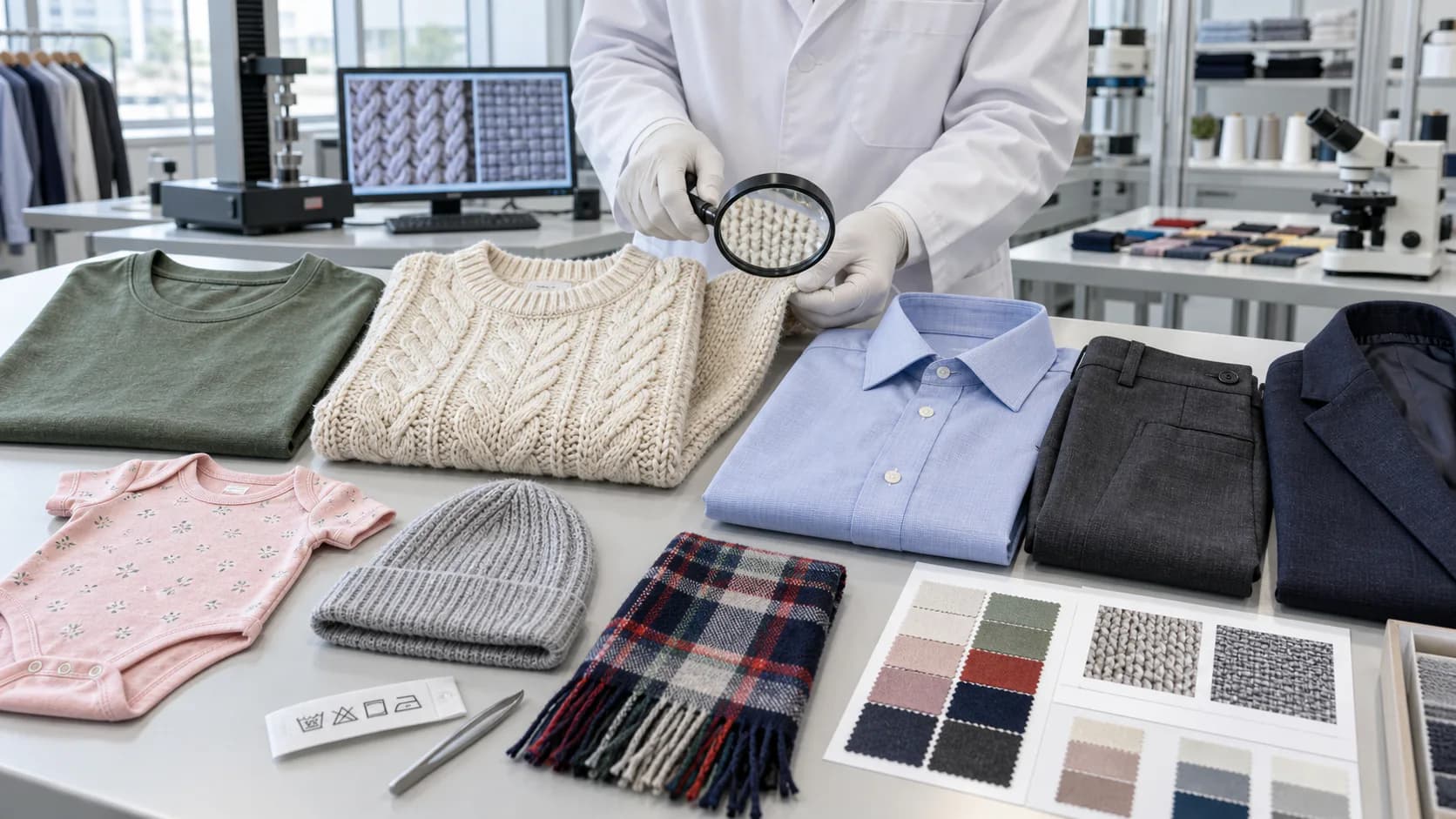
Classification conclusion and import answer
Conditional conclusion: apparel has no single HTSUS number or duty rate. Knitted or crocheted garments and accessories fall in Chapter 61; garments and accessories not knitted or crocheted generally fall in Chapter 62. The ten-digit line turns on garment identity, sex, infant status, chief-weight fiber, construction, coating and sometimes performance. Ordinary new apparel usually does not need one general federal import license, but the importer must separately establish classification, textile origin, country marking, FTC fiber and care labeling, CPSC flammability, children-product compliance and any forced-labor or trade-remedy restriction. A supplier's six-digit HS code is not a U.S. classification decision.
| Article | Knit/crochet | Not knit/crochet | Decisive facts |
|---|---|---|---|
| Coats | 6101-6102 | 6201-6202 | sex, fiber, coating |
| Suits, jackets, trousers, dresses | 6103-6104 | 6203-6204 | components, sex, fiber |
| Shirts and blouses | 6105-6106 | 6205-6206 | construction, sex, fiber |
| Underwear and nightwear | 6107-6108 | 6207-6208 | article, sex, fiber |
| Babies' garments | 6111 | 6209 | body height and intended wearer |
| Coated and other garments | 6113-6114 | 6210-6211 | base fabric, coating, function |
| Accessories | 6115-6117 | 6212-6217 | article and material |
Deciding between Chapters 61 and 62
Apply GRI 1, Section XI and Chapters 61-62 notes, then GRI 6. Loop formation identifies knit/crochet construction; interlaced warp and weft ordinarily identifies woven construction. Heading 6109 covers qualifying T-shirts, 6110 sweaters and similar articles, 6212 brassieres and related articles, while 6111 and 6209 are reserved for babies' garments as legally defined. Garments made from specified coated fabrics may enter 6113 or 6210. Section XI Note 14 generally requires garments of different headings to be classified separately even when put up in retail sets, unless a heading provides otherwise. Worn clothing enters 6309 only when the heading's wear and packing conditions are met.
Review the technical documents before selecting HTSUS
Obtain a physical sample and close fabric image, garment pattern, intended wearer and sex, body-size range, shell and lining composition by weight, construction method, coating, finishing, pockets, closure, accessories, technical claims and retail configuration. Mixtures follow Section XI Note 2; marketing prominence or cost does not replace chief-weight analysis. A unisex garment may be classified under the women/girls provisions under the Chapter notes, while infants use the specific legal criterion rather than a marketing age label. Match tech pack, bill of materials, cutting/sewing record, fiber test, care label, invoice and actual SKU. Do not combine unlike styles under one line merely because the brand calls them a collection.
Base duty, preference and entry charges
Column 1 General, special-program and Column 2 duty must be read from the exact ten-digit HTSUS on the entry date. Apparel rates vary materially by garment and fiber and may include compound or specific rates; there is no lawful chapter-wide percentage. Preference requires the product-specific textile origin rule and valid proof. Add merchandise processing fee, harbor maintenance fee where applicable, brokerage and examination costs separately. State sales/use tax is not a federal customs duty. Chapter 99 measures, sanctions and AD/CVD must be screened by origin and written scope; a Free base rate does not establish a zero landed cost.
Textile and apparel origin rules
Preferential origin and ordinary textile origin are separate inquiries. For quotas, marking and certain entry purposes, 19 CFR 102.21 applies sequential textile and apparel rules, including tariff shifts and, for specified garments, the country where the good was wholly assembled. An FTA may impose yarn-forward, fabric-forward or cut-and-sew requirements with special rules and exceptions. Country of shipment, brand headquarters and the location where labels were attached do not decide origin. Preserve yarn/fabric mill, cutting, assembly and finishing records. A false origin claim can cause preference denial, redelivery, penalties and forced-labor detention.
FTC fiber, origin and care labeling
The Textile Fiber Products Identification Act and FTC rules require accurate generic fiber names and percentages, country of origin, and the identity or RN of the responsible business. The Care Labeling Rule, 16 CFR Part 423, requires manufacturers and importers to attach care instructions for textile wearing apparel, subject to the rule's coverage and exceptions. Labels must be conspicuous, durable as required and consistent with testing. Claims such as 100% cotton, recycled, antimicrobial, UV protective or flame resistant need substantiation. FTC origin labeling and CBP marking under 19 U.S.C. 1304 and 19 CFR Part 134 must be reconciled; a sewn label cannot cure inaccurate entry data.
CPSC flammability and children products
Most ordinary wearing apparel is subject to the Standard for the Flammability of Clothing Textiles, 16 CFR Part 1610, unless an exemption applies. Children's sleepwear is separately regulated under 16 CFR Parts 1615 and 1616 according to size and garment characteristics. Children's products may also require CPSIA lead, phthalate, tracking-label, testing and Children's Product Certificate controls depending on materials and age grading. Drawstrings, small parts, decorative coatings and metal trims require product-specific review. The importer should maintain a testing rationale and certificates tied to the exact production lot rather than relying on a generic fabric report.
Special apparel, used clothing and enforcement
Protective apparel may remain classified by textile construction while also triggering OSHA, NIOSH, FDA, EPA or other rules depending on the claimed use; classification does not certify performance. Used clothing, military items, wildlife-derived trim, counterfeit goods and garments from sanctioned parties need separate admissibility screening. Cotton and apparel supply chains also require UFLPA due diligence: map entities and production stages, screen the UFLPA Entity List and retain records capable of rebutting a forced-labor presumption. Detention risk cannot be solved by changing origin labels or routing through a third country.
Entry file and customs description
Keep the purchase contract, invoice, packing list, bill of lading, entry bond, classification memorandum, tech pack, BOM, fiber-weight calculation, fabric images, size/sex evidence, origin production records, care and content labels, flammability tests, CPC where applicable and supplier compliance warranties. A useful description is: “Men's woven cotton shirts, long sleeve, 100% cotton by weight, not knit or crocheted, not coated, sizes ..., brand ..., new, country of origin ...”. Replace each decisive attribute for knit tops, trousers, dresses, infants' wear or accessories. “Garments” or one code for a mixed container is not a defensible entry description.
Official U.S. sources
Official sources checked September 12, 2026: USITC HTSUS search, 19 CFR 102.21 textile and apparel origin, FTC apparel labeling, FTC Care Labeling Rule, CPSC Flammable Fabrics Act guidance and CPSC children's sleepwear guidance. Recheck the live HTS, Chapter 99, agency notices and origin-specific measures on entry.
Limits and pre-import actions
This is a chapter-level legal framework, not a CBP ruling for an unidentified SKU. Final advice requires a sample, construction, garment identity, sex/age, fiber weight, shell and lining, coating, set configuration, claims, producer, origin chain, value and entry date. Small differences in stitch construction, fiber percentage or design can change both tariff and agency treatment. For recurring or high-value imports, obtain a CBP binding ruling and test pre-production samples, and allocate classification, origin, labeling, recall, redelivery and duty liability in the supply contract. Search optimization cannot guarantee ranking, indexing or citation; those decisions remain with the search engine.
Official sources to verify
- WCO — HS Nomenclature 2022 and General Rules for Interpretation
- United States International Trade Commission — Harmonized Tariff Schedule
Editorial note
Prepared by the Global HS Code Checker Editorial Team for customs-classification, tariff and import-policy research. The correct code and applicable measures may change with the merchandise's actual characteristics, jurisdiction, entry date and supporting record. Verify the current tariff, governing measures and competent customs authority before filing an entry. A reviewer is identified only after a named expert has completed the review.